
$5 million Mars Rock Found in Africa is Being Investigated For This Reason
The West African country of Niger is investigating after the largest ever piece of Mars rock, which was found there, was sold for millions in a New York auction.
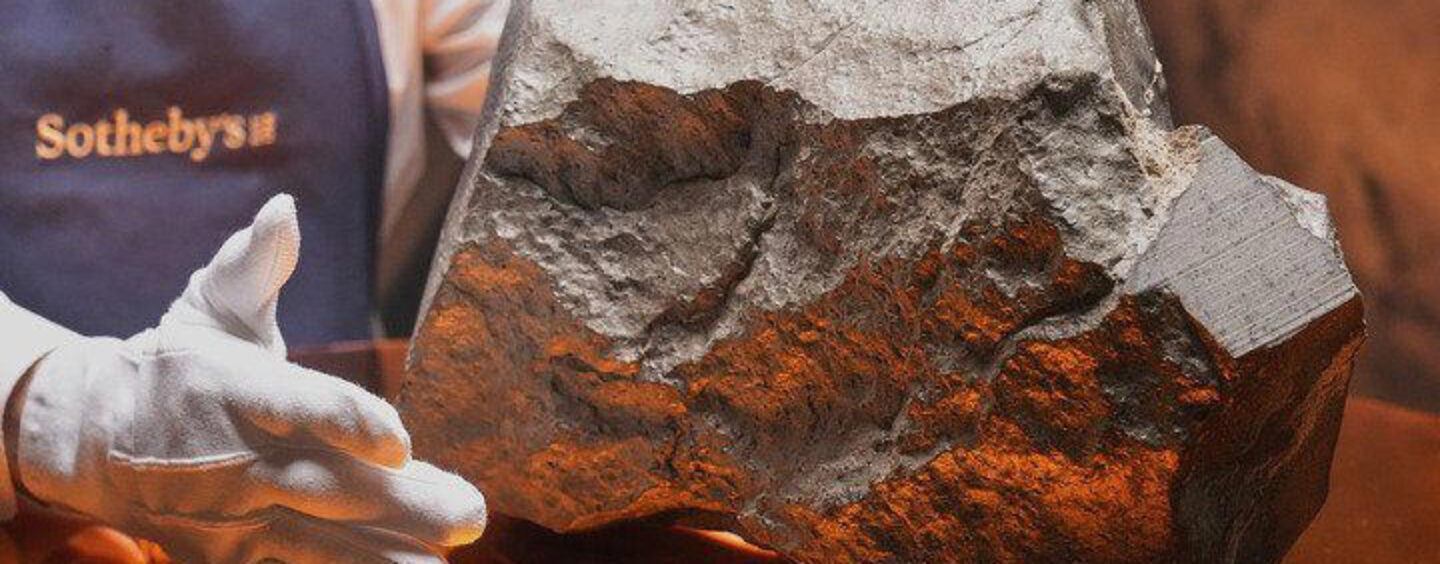
A 25 kg meteorite discovered in the Sahara Desert in Niger is the largest piece of Mars ever to be found on Earth and set a world record when it sold for over $5 million at an auction in July.
But, officials in Niger fear that the rock may have been the subject of “illicit international trafficking” and smuggled out of the country, and they have launched an investigation.
According to auctioneer Sotheby’s, the rock, called NWA 16788, was blown from the surface of Mars by a large strike from an asteroid, where it then travelled 140 million miles to our planet.
A meteorite hunter discovered it in the Sahara Desert in November 2023. Their identity, along with the buyer’s, remains anonymous.
The Heritage academic journal says the rock was first sold to an international dealer and ended up in a private gallery in Italy. There, at the University of Florence, a team of scientists analysed it in 2024 to learn more about its origins.
In Italy, it was briefly on display to the public in Rome, but wasn’t seen publicly again until it recently went up for auction in New York.
Niger has since raised questions about how the rock came to be sold at an auction in the US, and last month launched an investigation.
Then, last week, the country’s president, Abdourahamane Tiani, suspended the exportation of “precious stones, semiprecious stones and meteorites nationwide”.
In a statement to The Associated Press (AP), Sotheby’s said: “As with everything we sell, all necessary documentation was in order at each stage of its journey, in accordance with best practice and the requirements of the countries involved.”
Opinion differs among experts on whether rare minerals, such as meteorites, can be qualified as “cultural property”, which would impact how easy or difficult an item is to recover.
“If the meteorite was not stolen and if it was properly declared upon import into the U.S., then it would not seem that Niger can recover the meteorite,” Patty Gerstenblith, a cultural heritage lawyer, told the AP.
Palaeontologist, Paul Sereno, told the publication: “When you have laws that clearly say rare minerals like meteorites are cultural artefacts, you cannot simply come in and take something that is so unique and valuable to a country.”
He added: “We’re just not in the colonial era anymore.”
Written Ellie Abraham



No Comments so far
Jump into a conversationNo Comments Yet!
You can be the one to start a conversation.Only registered users can comment.