
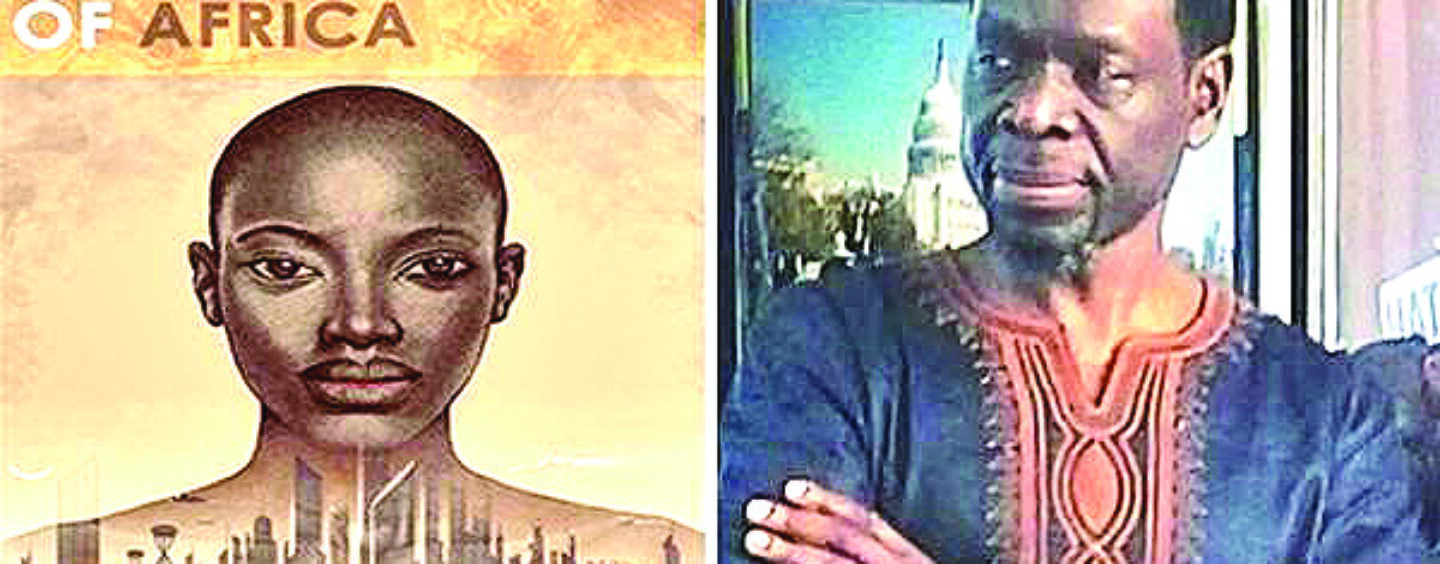
“The United States of Africa,” Set in the Year 2525
The United States of Africa is a futuristic new novel set in the year 2525, when Africa is
united as one country with the world’s most powerful economy and military. The novel has been
launched on Kickstarter by its author, Milton Allimadi, a journalist and PhD student in history
who is seeking your support to complete the project.
Allimadi launched a successful Kickstarter campaign in 2023 for his book, ADWA:
Princess Taytu & Emperor Menelik in Love & War. He’s looking for support on Kickstarter for
this new project, which will be illustrated by Obedirwoth, the same artist who worked on
ADWA.
The setting of this Afrofuturist story, The United States of Africa, is 500 years from now.
Due to environmental and climatic catastrophes caused by industrial manufacturing production,
the Earth has become extremely hot. As a result, conditions for longer human survival now favor
melanated people. The more melanated you are, the longer your life expectancy. Melanin-rich
people like the “Sudan-Black” or “Senegal-Black” types live on average to 100 to 110 years old.
In Allimadi’s novel, The United States of Africa, people who are melanin-deficient live
on average 35 to 40 years.
“We have become too accustomed to the demonization of melanin, historically and in our
time,” says Allimadi, author of The United States of Africa. “I want people to think outside the
box. To remember that without melanin, no human beings would exist; Africans, Europeans,
Asians, or Latinos.”
All human beings originate from Africa, and all of them were originally melanated, and
that’s how they survived the tropical heat. Some of these early ancestors migrated to other parts
of the world, then, over a period lasting tens of thousands of years, through adaptation to new
climatic and environmental conditions, took on new features and skin tones. They gave birth to
all the other “races” of the world.
“So I want people to think about how absurd contemporary racism really is, since we
have the same ancestral parents,” Allimadi says. “I flipped the script, so to speak.”
In The United States of Africa, melanin is celebrated even by people who once resented
“blackness.” In countries like India, everyone now wants to touch the richly melanated
“untouchables” most of whom migrate to Africa to take up their automatic citizenship.
In countries that were once European-majority nations, such as the United States, the
U.K., France, Germany, and others, the governments now favor melanated people over non-
melanated ones who are now regarded as less economically productive. The investment in the
education, healthcare, and housing of less-melanated people is neglected. They now have no
access to financing or credit.
Unemployment and crime rise in European-majority neighborhoods. Soon, these
dynamics, coupled with “tough on crime” policies, led to mass incarceration of the less-
melanated communities. European people eventually comprise more than 90 percent of the
prison populations in Western countries. European people become the new social underclass.
Meanwhile, in Africa, the continent has now been united into one country, with the
world’s strongest economy and a powerful military under a unified command.
With its dominant global position, Africa is able to demand that the U.S. government pay
reparations to descendants of Africans who were enslaved in the United States; that France pay
reparations to Haitians; that Britain pay reparations to descendants of Africans enslaved in the
Caribbean; and that European nations pay reparations for colonialism in Africa.
Allimadi’s kickstarter campaign includes several sample chapters from The United States
of Africa, including ones about: how popular uprisings all over the continent after the United
States of America threatened Burkina Faso’s Ibrahim Traore led to the formation of the United
States of Africa; a meeting between an American president who traveled to Africa to beg for
foreign aid; and, police brutality against European American youths.
Gone are the days when outside powers invaded and plundered Africa before unification.
Gone are the days such as 1960, when Belgium invaded newly-independent Congo and, working
with the CIA, overthrew prime minister Patrice Lumumba and had him murdered in 1961.
Gone are the days, such as 2011, when, led by the United States and France, NATO
invaded Libya after its leader Qaddafi was about to launch a new African currency backed by
gold in order to end dependency on the US dollar and Euros. Qaddafi was killed during the
invasion, and Libya was destroyed.
Gone are the days of exploitation of Africa’s resources by Western countries, Japan, and
China.
In The United States of Africa, the country is finally able to use its rich mineral and
natural resources, combined with its human and intellectual capital, to create wealth and
prosperity in Africa for Africans.
All African descendants, wherever they are in the world, are eligible for automatic
citizenship the minute they step on African soil.
“While the premise may be fictional, the potential empowerment of African people
through the formation of a United States of Africa is very real,” Allimadi concludes.
In the end, more and more people realize the power and critical importance of melanin
and the absurdity of anti-Black racism.
Learn more about the Kickstarter campaign here ("The United States of Africa–a novel"
by Milton Allimadi — Kickstarter)
Note: You can also follow the author on Instagram and X



No Comments so far
Jump into a conversationNo Comments Yet!
You can be the one to start a conversation.Only registered users can comment.