

Why I Chose to Buy and Sell African-Sourced Coffee: A Step Toward Economic Liberation
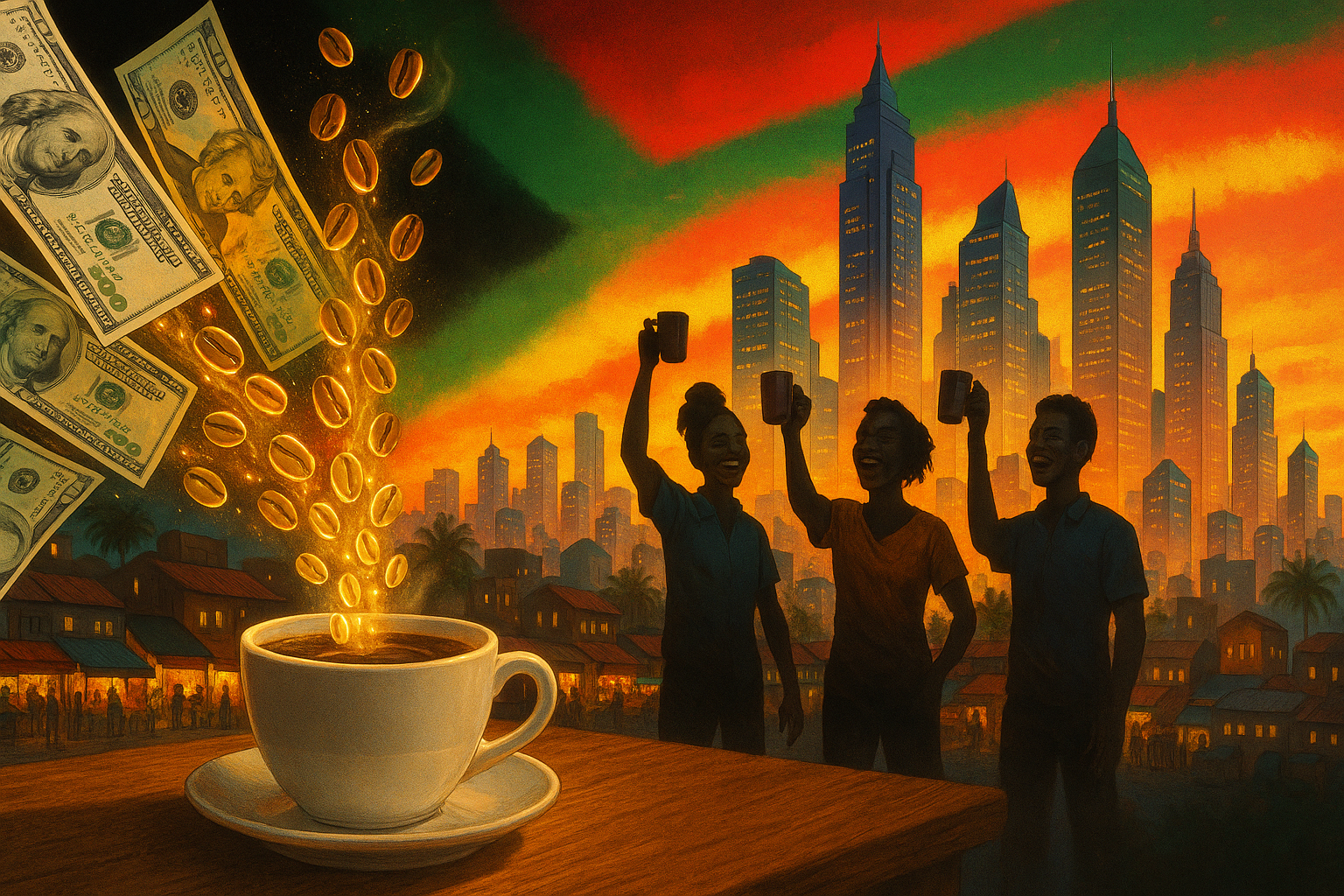
By Peter Grear, with AI Assistance
September 23, 2025
Coffee is one of the most traded commodities in the world, enjoyed in homes, cafés, and offices every single day. Yet few consumers stop to think about where their coffee comes from, who grows it, and who actually profits from its global demand. For me, coffee is no longer just a drink—it is now a powerful symbol of Africa’s economic liberation and the Right of First Refusal (RoFR). That is why I have made the decision to buy and sell African-sourced coffee from this day forward.
Africa: The Birthplace of Coffee
The coffee story begins in Africa. Ethiopia is celebrated as the cradle of coffee, with legends tracing the first discovery of the bean to a goat herder centuries ago. Today, Africa remains a major producer, with Ethiopia, Uganda, Kenya, Tanzania, and Rwanda among the top exporters. African beans are considered some of the finest in the world, prized for their complexity, flavor, and heritage.
Yet despite this legacy, African farmers often capture less than 10 percent of the final retail value of coffee sold internationally. The vast majority of profits are siphoned off by multinational corporations that control the branding, roasting, packaging, and global distribution. This imbalance is a classic example of how Africa supplies raw resources, while others reap the real economic rewards.
Why RoFR Matters
The Right of First Refusal (RoFR) is more than a legal principle—it is an economic strategy that ensures Africans and the diaspora are first in line to benefit from Africa’s resources. For too long, others have taken the first and largest share of Africa’s wealth, leaving crumbs for its people. My commitment to African-sourced coffee is a practical demonstration of RoFR in action.
By prioritizing Africa’s coffee producers, we create new pathways for farmers, cooperatives, and entrepreneurs. This is how we begin to reverse centuries of exploitation and reclaim Africa’s rightful place in the global marketplace.
Coffee and Youth Engagement
Another reason coffee is central to this decision is its natural connection to students and youth. Coffee fuels late-night study sessions, sparks conversations in campus cafés, and powers young entrepreneurs chasing their dreams. By centering African coffee in the Economic Liberation of Africa movement, we give students a tangible way to live the mission daily.
Every cup becomes more than caffeine—it becomes a contribution to Africa’s future. Youth across Africa and the diaspora can participate not just as consumers but as advocates, influencers, and entrepreneurs in the supply chain.
Diaspora Dollars for Diaspora Dreams
The African diaspora spends billions on coffee annually. Imagine if even a small portion of that purchasing power was redirected to African-sourced products. The impact on local farmers, youth cooperatives, and African economies would be transformative.
Buying and selling African coffee creates a bridge between diaspora dollars and African opportunity. It is not charity—it is empowerment. It’s about building sustainable wealth and independence by choosing Africa first.
Aligning With Global Trends
Globally, consumer demand is shifting toward ethical, sustainable, and traceable products. Conscious buyers want to know their purchases make a difference. African coffee fits perfectly into this trend, offering a premium product backed by stories of resilience, heritage, and empowerment.
By promoting African-sourced coffee, we align with this new global ethic while distinguishing ourselves as champions of Pan-African solutions to global inequities.
A Call to Action
My decision to buy and sell African coffee is not just personal—it is a call to action for students, youth, diaspora communities, and allies. If you drink coffee, make it African coffee. If you support fair trade, make it Pan-African trade. If you believe in the Right of First Refusal, demonstrate it with every cup you buy.
👉 Please support my effort by purchasing African-sourced coffee through my store at this link. Every purchase helps advance the Economic Liberation of Africa movement and proves that RoFR works in practice, not just in theory.
Coffee is only the beginning. It is a daily, visible, and accessible product that symbolizes Africa’s potential to lead the world in industries ranging from agriculture to technology. Through RoFR, through collective action, and through conscious choices, we can ensure that Africa’s opportunities are no longer outsourced but owned by Africans and their global diaspora.
Conclusion
I have chosen to align my habits and my business with the vision of economic liberation. African-sourced coffee is not just better coffee—it is a statement of principle, a symbol of unity, and a strategy for empowerment. Together, we can transform every sip into a step toward a liberated Africa.
Join me. Drink African. Support RoFR. Build the future.
✊🏿 Support the movement today—subscribe to Greater Diversity News, follow our campaign for the Economic Liberation of Africa, and consider donating to help us expand the Right of First Refusal initiative.



No Comments so far
Jump into a conversationNo Comments Yet!
You can be the one to start a conversation.Only registered users can comment.