
From SNCC to TikTok: How Black Youth Have Always Driven American Change
By Peter Grear, with AI assistance
Publication date: February 2, 2026
For as long as Black people have resisted injustice in the United States, Black youth have been at the center of that resistance. From lunch-counter sit-ins to livestreamed protests, young Black Americans have repeatedly stepped forward at moments when the nation’s contradictions became impossible to ignore.
What is often described today as a “new wave” of youth activism is better understood as a continuation of a long and unfinished tradition—one in which young people do not wait their turn, ask for permission, or confine their demands to what the political establishment considers reasonable.
Youth as the Engine of the Civil Rights Movement
In the popular telling of the Civil Rights Movement, leadership is frequently reduced to a handful of iconic figures. But on the ground, it was young people—many barely out of high school—who transformed moral outrage into mass action.
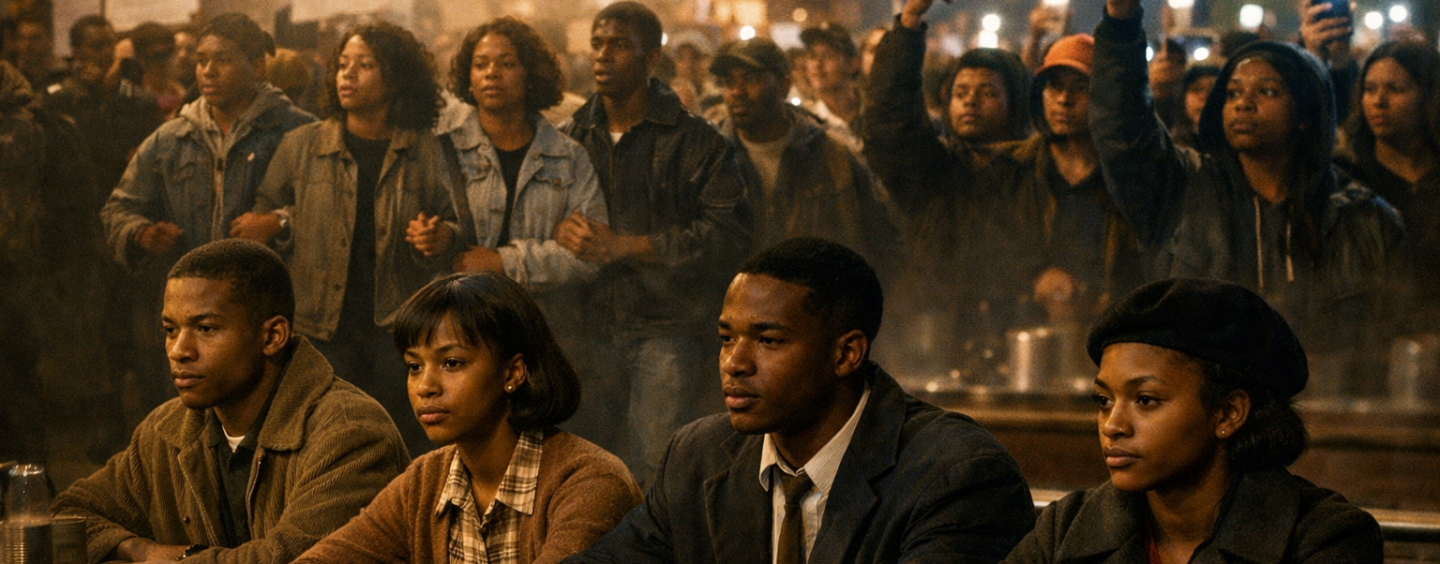
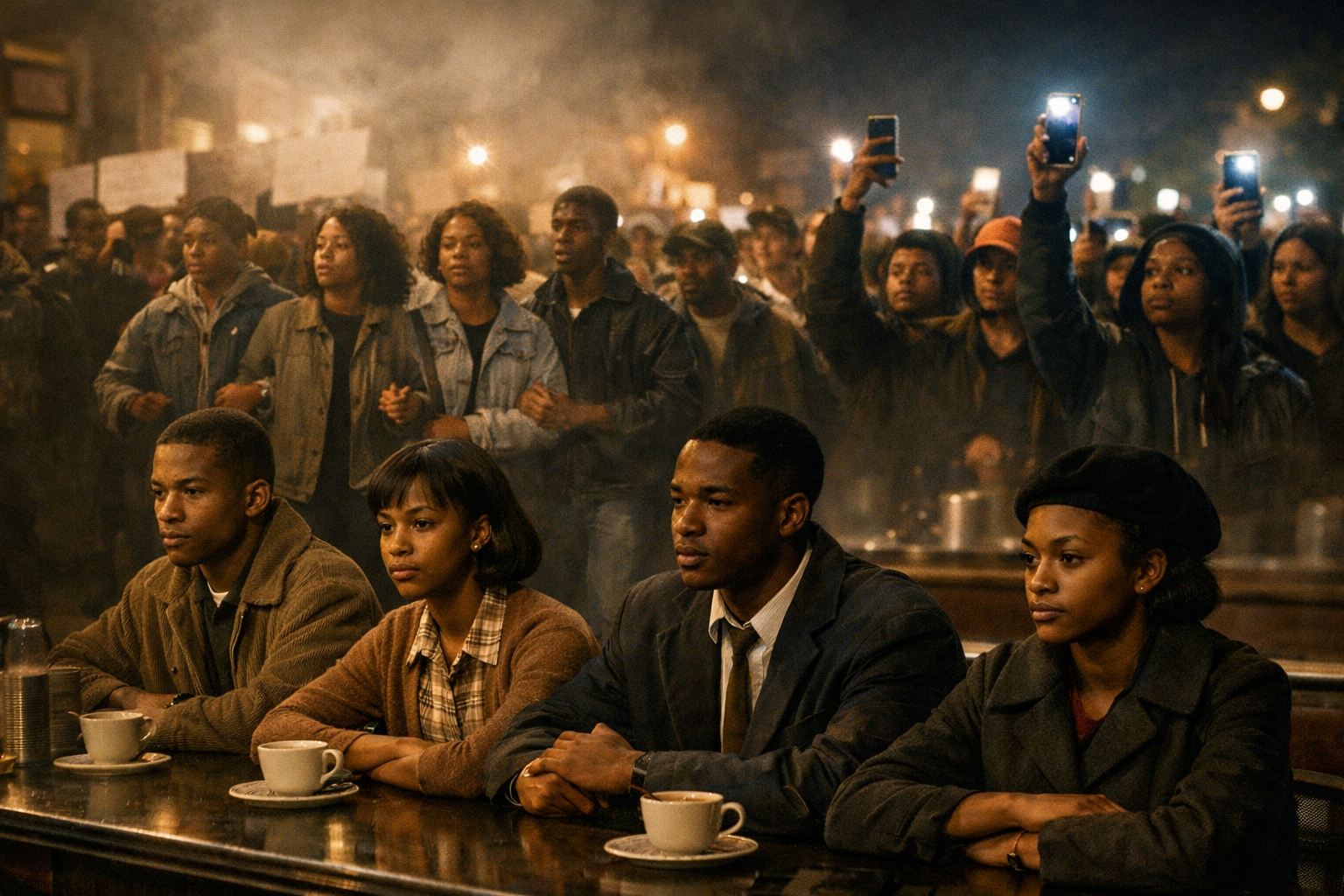
College students organized sit-ins across the South, placing their bodies on the line to desegregate public spaces. High school students walked out of classrooms, endured arrests, and faced violence with discipline and courage. Organizations like the Student Nonviolent Coordinating Committee emerged precisely because young activists understood that incrementalism and respectability were insufficient responses to systemic brutality.
SNCC’s youth leaders did not simply “support” the movement; they redefined it, pushing older organizations toward more confrontational strategies and grassroots democracy. Their work reminds us that Black youth activism has never been an accessory to change—it has been its engine.
From Television Cameras to Phone Cameras
What has changed is not the impulse to resist, but the tools available to do so. In the 1960s, images of police dogs and fire hoses shocked the conscience of the nation when they appeared on evening news broadcasts. Today, similar violence is documented instantly—often by young people themselves—on phones carried in their pockets.
This shift has altered power dynamics. Black youth no longer depend on mainstream media to validate their experiences. They document, narrate, analyze, and circulate evidence in real time, collapsing the distance between local injustice and national attention.
Yet the emotional response—anger, grief, determination—is strikingly familiar. Just as earlier generations were radicalized by witnessing lynch mobs and state repression, today’s youth are shaped by viral videos of police killings, courtroom impunity, and political indifference.
Continuity, Not Rupture
Too often, commentators frame contemporary Black youth activism as spontaneous or reactionary, divorced from history. This framing is both inaccurate and convenient. It allows institutions to dismiss youth demands as naïve while ignoring the fact that young people are drawing from deep historical memory.
Modern activists routinely reference Jim Crow, COINTELPRO, mass incarceration, and earlier student movements to explain why trust in institutions is so low. In this sense, TikTok explainers and Instagram threads function much like freedom schools once did—spaces of political education built when formal systems failed.
The message across generations is consistent: when the system refuses to protect Black lives, Black youth organize to protect one another.
Why Youth Act First
Black youth often experience state power in its most coercive forms—over-policing in schools, surveillance online, limited economic opportunity, and shrinking civic space. With less wealth to lose and fewer illusions about fairness, young people frequently recognize injustice earlier and respond more decisively.
This is not recklessness; it is clarity.
Historically, youth movements have been willing to say what others hesitate to admit: that inclusion without power is hollow, that reform without accountability is fragile, and that waiting for gradual progress can be fatal.
The Through Line to Today
From SNCC field organizers to today’s digital-native activists, the through line is unmistakable. Black youth have consistently understood that freedom is not granted by benevolence but won through pressure, imagination, and collective action.
What differs now is scale and speed—not purpose. The same spirit that fueled sit-ins and freedom rides animates today’s protests, mutual aid networks, and political education projects. The platforms have changed; the stakes have not.
Looking Ahead
As debates rage about the “future” of Black activism, history offers a clear lesson: that future will be shaped by young people, whether institutions are prepared for them or not. Ignoring Black youth activism has never stopped it. Attempting to manage it has rarely succeeded. Learning from it, however, remains an open opportunity.
This series begins from a simple truth: if you want to understand where American democracy is headed, start by listening to the young people who have always been pushing it forward.
Join the conversation
What moments in history have shaped your understanding of Black youth activism?
Join the conversation—leave your take or a question.
Support independent Black media
This work is part of The Economic Liberation of Africa and Greater Diversity News’ commitment to covering power, youth, and structural change.
Donate to GDN – Greater Diversity News | Subscribe – Greater Diversity News
Help grow The Economic Liberation of Africa conversation—forward to someone curious about Africa-centered opportunity.



No Comments so far
Jump into a conversationNo Comments Yet!
You can be the one to start a conversation.Only registered users can comment.