

Amanda Seales vs. 20 Conservatives Revives the Du Bois–Washington Debate
By Tony Grear, DC Correspondent
October 10, 2025
From Black Wall Street to today’s wealth gap, history shows that progress requires both systemic reform and personal responsibility—not one at the expense of the other.
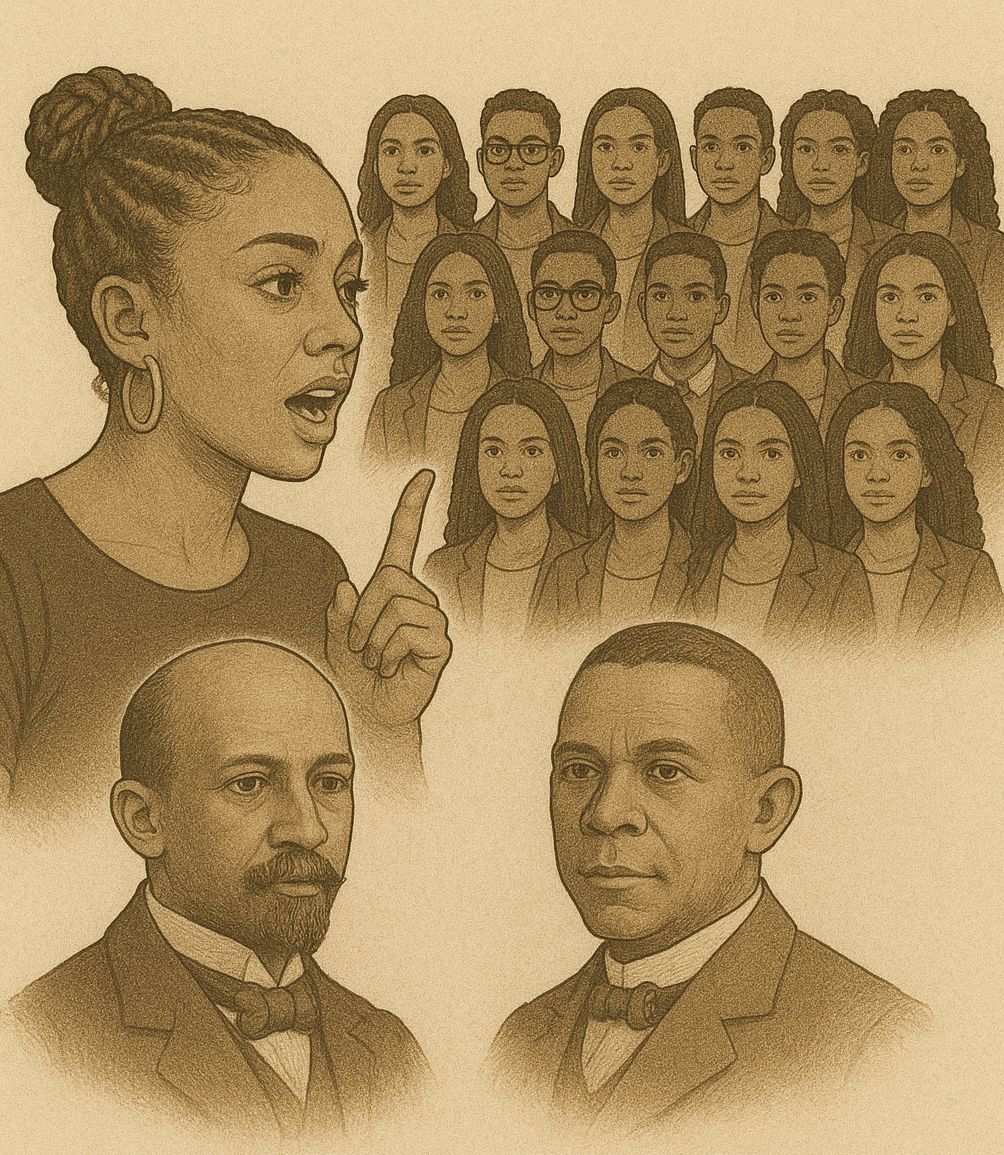
When comedian and cultural critic Amanda Seales walked into a room with 20 Black conservatives in the viral video “1 Black Radical vs. 20 Black Conservatives,” the sparks that flew weren’t just about today’s politics. They echoed one of the oldest and most consequential debates in Black American history: the clash between Booker T. Washington and W.E.B. Du Bois.
More than a century ago, Washington preached self-reliance. He urged African Americans to focus on vocational training, entrepreneurship, and steady economic advancement. Du Bois countered that no amount of discipline or work ethic could overcome laws, customs, and policies designed to hold Black people back. He insisted that civil rights and systemic change were non-negotiable.
The Seales debate brought those perspectives back to life. The conservatives, echoing Washington, emphasized personal responsibility, family values, and entrepreneurship. Seales, channeling Du Bois, pressed the case for addressing systemic racism and inequality.
The temptation is to take sides. But history shows that doing so misses the point. Both approaches are essential.
Washington’s Lessons: Building Strength from Within
Washington’s philosophy was not without merit. His emphasis on practical skills and economic independence helped seed Black enterprise in the early 20th century. Entire districts like Tulsa’s “Black Wall Street” flourished, filled with banks, insurance companies, schools, and businesses owned and operated by Black families.
That ethic of self-reliance endures today in the rising tide of Black entrepreneurs who build wealth, create jobs, and achieve independence despite persistent barriers. Washington’s call for resilience and skill remains a cornerstone of progress.
Du Bois’ Lessons: Demanding Justice
Yet Du Bois was equally correct. Black Wall Street wasn’t destroyed because its residents lacked grit or discipline. It was burned to the ground by white mobs, aided by complicit authorities. That tragedy exposed the limits of self-reliance without systemic protection.
Du Bois’s insistence on structural reform found vindication in the Civil Rights Movement. Court victories like Brown v. Board of Education and landmark laws like the Civil Rights Act of 1964 were essential in dismantling legalized segregation. Today, the same systemic challenges—wealth inequality, discriminatory policing, unequal schools—demand structural remedies that echo Du Bois’s call.
The Synthesis: A Dual Path Forward
The truth is simple: systemic fairness and self-reliance are not opposites. They are complements. Policy victories open doors, but personal discipline and community strength prepare people to walk through them.
The Civil Rights Movement proved this. It married Washington’s ethic of discipline and community-building with Du Bois’s insistence on justice. Churches and families sustained the struggle while leaders like Martin Luther King Jr. demanded America live up to its promises.
Today’s challenges call for the same balance. Black entrepreneurs need fair access to capital. Families need strong schools, but those schools also need equal funding. Communities must teach resilience, even as they fight for reforms in housing, healthcare, and criminal justice.
Beyond the Debate
Perhaps the real lesson of Amanda Seales versus 20 conservatives is not who won the argument, but that the argument itself endures. For more than a hundred years, Black America has wrestled with the same question: Should progress come from demanding equality or from building self-reliance?
The answer, then as now, is both.
👉 Support Greater Diversity News (GDN): Our mission is to amplify conversations that drive progress, equity, and opportunity for the African diaspora and beyond. If you believe in the work we’re doing, please consider subscribing to our newsletter and making a donation to help us continue this vital mission.
NOTE: This article was written with AI assistance.



No Comments so far
Jump into a conversationNo Comments Yet!
You can be the one to start a conversation.Only registered users can comment.