
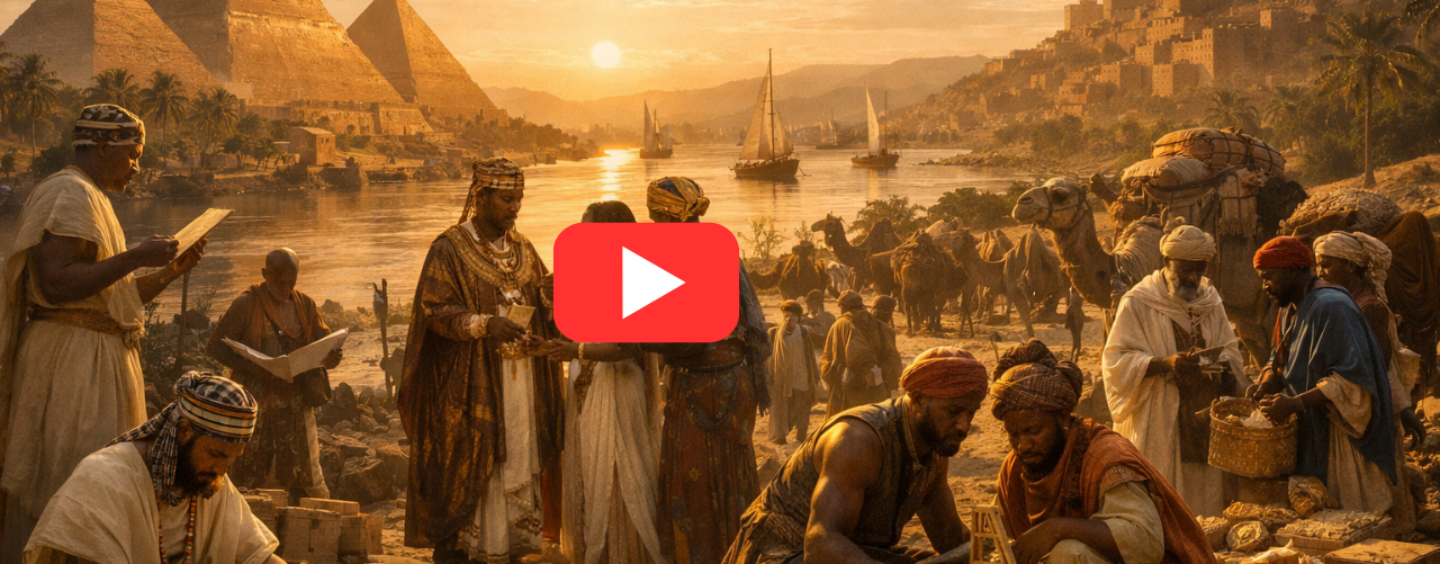
Before DEI. Beyond DEI. Why the Sixth Region and RoFR Are About Economic Correction—Not Inclusion

By Peter Grear, with AI assistance
December 26, 2025
As “DEI” becomes a disparaging shorthand in political and corporate discourse, it is increasingly framed as artificial—an intervention that allegedly overrides merit in favor of identity. This framing collapses when examined through history. But it collapses even faster when viewed through the lens of economic policy.
Black achievement is not a product of inclusion.
It is a civilizational fact.
What history demonstrates—clearly and repeatedly—is that Black people have always produced value, innovation, and systems of governance. What has changed over time is not capability, but access to ownership, contracts, capital, and decision-making power.
That is precisely where the modern conversation must shift:
from symbolic inclusion to structural economic correction.
From Civilizational Builders to Contract Exclusion
African civilizations did not merely produce culture—they built economies. Trade networks, manufacturing systems, agricultural innovation, and governance structures flourished long before colonial disruption. The global economy did not sideline Africa because of inefficiency; it was restructured to extract African value while excluding African ownership.
Colonialism and its post-colonial successors perfected this imbalance through:
- Control of procurement systems
- Preferential access for foreign firms
- Financial rules that sidelined local and diaspora enterprises
The result is a modern paradox: Africa generates immense value, yet African and diaspora businesses are often locked out of the very contracts tied to their own resources, labor, and markets.
This is not a DEI issue.
It is a procurement and power issue.
The Sixth Region: Reframing the Diaspora as an Economic Actor
The Sixth Region of the African Union formally recognizes the African diaspora as an integral part of the continent’s future—not symbolically, but strategically. It acknowledges that African descendants worldwide represent:
- Capital
- Skills
- Market access
- Global influence
In policy terms, the Sixth Region reframes the diaspora from external supporters to internal economic stakeholders. This shift matters because history shows that when Africans are excluded from ownership structures, inclusion rhetoric alone changes nothing.
The Sixth Region asserts a simple truth:
If Africans and the diaspora helped build global wealth historically, they must participate structurally in future wealth creation.
Why RoFR Is the Economic Counterpart to the DEI Debate
The Right of First Refusal (RoFR) moves this principle from recognition to enforcement.
RoFR does not guarantee contracts.
It guarantees fair access to compete.
Under RoFR frameworks, when substantial public contracts are awarded by public bodies, qualified African or diaspora-aligned bidders are given the right to match or beat competing bids—rather than being excluded at the outset in favor of multinational incumbents.
This matters because:
- Most exclusion today happens before competition begins
- Multinational firms benefit from historical advantage, not superior merit
- African and diaspora firms are often denied scale-building opportunities
RoFR is not charity.
It is not favoritism.
It is structural correction.
Just as DEI sought to remove barriers in hiring, RoFR removes barriers in procurement, ownership, and enterprise growth—where real economic power resides.
Beyond DEI: From Inclusion to Institution Building
The backlash against DEI reflects a deeper anxiety: the fear that historical advantage is being questioned. But RoFR and Sixth Region policy frameworks do not argue from sentiment. They argue from economics and history.
They ask:
- Who has benefited from exclusionary systems?
- Who built value without receiving ownership?
- What policies restore balance without undermining competition?
In that sense, RoFR is post-DEI economics.
It does not ask for sympathy.
It demands fairness in markets long distorted by design.
Why This Work Requires Support
Narrative correction without policy change is insufficient. And policy change without public understanding fails.
Greater Diversity News exists to connect:
- History to policy
- Diaspora identity to economic strategy
- Media narratives to institutional reform
Supporting this work helps fund:
- Research and reporting on RoFR adoption across Africa
- Public education on the Sixth Region’s economic role
- Diaspora-focused policy explainers for chambers, governments, and investors
- Independent journalism that challenges extractive economic norms
DEI debates may fade.
Procurement rules shape generations.
If Black achievement is a civilizational constant, then economic policy must finally reflect it.
Calls to Action
Support independent media advancing structural economic justice:
Donate to GDN – Greater Diversity News
Subscribe for Sixth Region & RoFR coverage:
Subscribe – Greater Diversity News
Join the conversation—leave your take or a question:
How should RoFR and Sixth Region policy reshape Africa’s global economic relationships?
Help grow The Economic Liberation of Africa conversation—forward to someone curious about Africa-centered opportunity.



No Comments so far
Jump into a conversationNo Comments Yet!
You can be the one to start a conversation.Only registered users can comment.