
Congressional Black Caucus and Civil Rights Leaders Relaunch a National Plan to Counter Trump’s Domestic Agenda
Black History Month becomes an organizing moment as leaders cite voting rights, DEI crackdowns, and an uncertain Supreme Court landscape.
By: Peter Grear (with AI assistance)
February 23, 2026
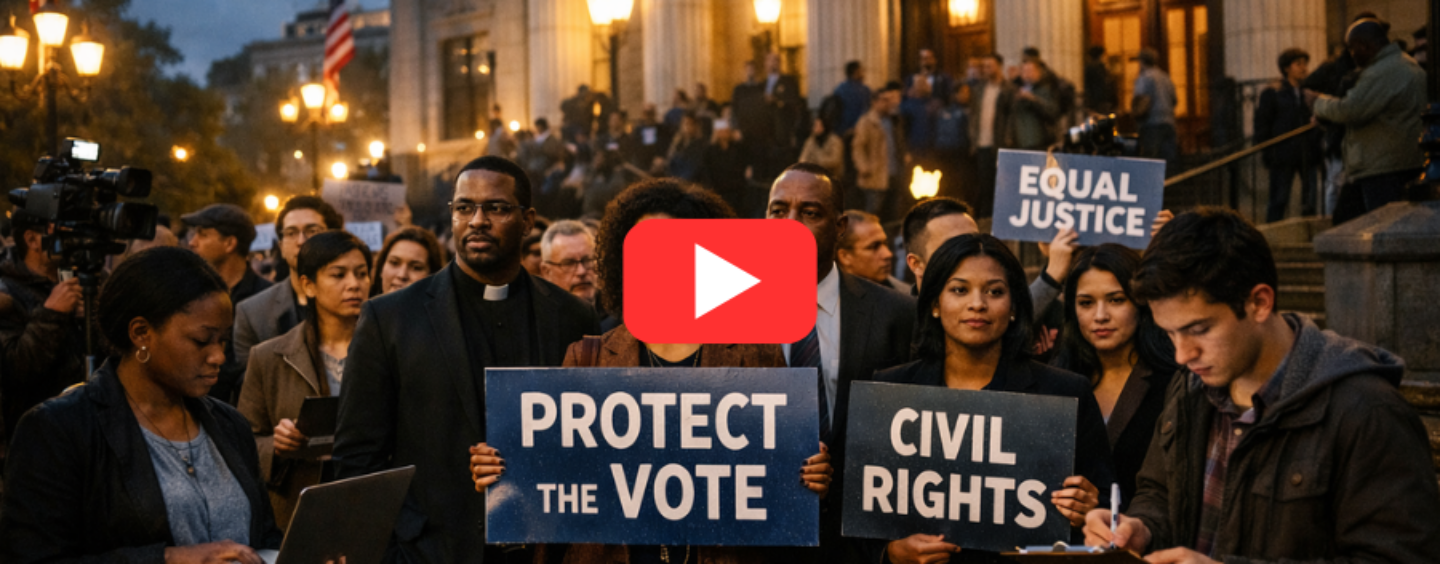
WASHINGTON, D.C. — In the middle of Black History Month, the Congressional Black Caucus (CBC) and prominent civil-rights leaders say they are rebuilding a coordinated national front to push back on President Donald Trump’s domestic agenda—an agenda they argue is weakening legal protections for minority communities and reshaping long-standing civil-rights enforcement priorities.
The new push is being framed less as a single campaign and more as a coalition “reset”: a shared strategy that blends organizing, litigation, and policy alignment at a moment when Democrats have limited formal power in Congress. At a Feb. 11 press event, CBC Chair Rep. Yvette Clarke described the last year as a period of accelerated rollbacks—touching voting access, social programs, and the distribution of political and economic power.
What the coalition says is at stake
The CBC and allied advocates point to a cluster of overlapping fights—each with its own battleground (courts, agencies, campuses, corporate policies) but increasingly treated as parts of one larger contest over civil rights and democratic participation.
Among the biggest flashpoints:
- Voting access and election protection: Coalition discussions have included how to safeguard ballot access in the 2026 midterms amid fears of federal intervention—concerns that, according to reporting, intensified after a raid on an Atlanta-area elections center.
- DEI bans and funding threats: The Trump administration has continued a broad crackdown on diversity, equity, and inclusion across federal institutions and beyond, including executive actions and pressure campaigns that threaten funding consequences for organizations tied to DEI initiatives.
- Culture and curriculum battles: Administration priorities also include efforts to reshape how U.S. history and culture are taught and represented—spanning educational settings and public institutions.
- A shifting civil-rights enforcement posture: The administration has emphasized investigating and prosecuting certain civil-rights complaints framed around discrimination against white people through federal enforcement channels.
The coalition’s message is that these aren’t isolated disputes. They’re warning that changes in one area (say, agency rules on DEI) can cascade into others (public education, corporate hiring and contracting, philanthropic funding, and voting-rights capacity).
What leaders say they’re prepared to do
One striking detail from the Feb. 11 gathering: leaders voiced strong outrage, but publicly offered limited operational specifics. Still, the contours of the response were clear—organize, litigate, and prepare for escalation.
House Minority Leader Hakeem Jeffries described the moment as “all-hands-on-deck,” and did not rule out tactics such as mass protests, boycotts, and additional legal action.
Civil-rights leaders also emphasized that litigation is already underway. Reporting notes that dozens of lawsuits have been filed challenging elements of the administration’s anti-DEI push—and that the administration recently dropped an appeal tied to a court ruling blocking efforts to withhold federal funding from schools over DEI policies.
The legal clock: Voting Rights Act pressure and Louisiana v. Callais
Coalition planning is also being driven by the courts—especially the Supreme Court.
On Feb. 6, the CBC released a readout of its Voting Rights & Redistricting Strategy Summit, convened Jan. 20, 2026. The caucus described it as a unified-response forum ahead of the Supreme Court’s pending decision in Louisiana v. Callais, which the CBC warns could further weaken Section 2 of the Voting Rights Act of 1965.
The summit’s participant list underscores how “coalition” is being operationalized: alongside CBC members were prominent voting-rights and civil-rights figures, including leaders connected to the Legal Defense Fund, the Lawyers’ Committee for Civil Rights Under Law, NAACP representatives, and Black Voters Matter.
In other words, the Feb. 11 press conference did not appear out of nowhere. It followed weeks of structured convenings aimed at anticipating court outcomes and coordinating responses across congressional strategy, legal teams, and grassroots capacity.
Why this moment feels different
Even with a familiar playbook—mobilize, sue, pressure institutions—leaders are candid that today’s terrain is harder. Federal courts remain divided on how race can be considered in hiring and policy, and the Supreme Court has signaled skepticism toward race-conscious frameworks in several domains.
That uncertainty shapes how coalitions choose targets. It also helps explain why leaders are pairing court fights with political organizing ahead of the midterms—trying to build durable leverage where litigation alone may not deliver quick wins.
What to watch next
Three developments will likely determine whether this relaunch becomes a sustained movement moment:
- The Supreme Court’s direction on the Voting Rights Act, including fallout for mapmaking and minority representation.
- How far federal agencies extend anti-DEI enforcement and funding pressure, and how courts respond.
- Whether coalition unity holds across institutions—from Capitol Hill to civil-rights groups to state attorneys general—where parallel legal and organizing strategies are being built.
If the CBC and its allied civil-rights leadership are right, Black History Month 2026 may be remembered not only for commemoration—but for a renewed attempt to coordinate national resistance across law, politics, and public culture.
Join the conversation—leave your take or a question.
Help grow The Economic Liberation of Africa conversation—forward to someone curious about Africa-centered opportunity.
Donate to GDN – Greater Diversity News | Subscribe – Greater Diversity



No Comments so far
Jump into a conversationNo Comments Yet!
You can be the one to start a conversation.Only registered users can comment.