

Diaspora Welcome Made Real: Traoré’s Offer Turns Rhetoric into Residency, Investment—and a Media Mandate
November 10, 2025
By Peter Grear, with AI assistance
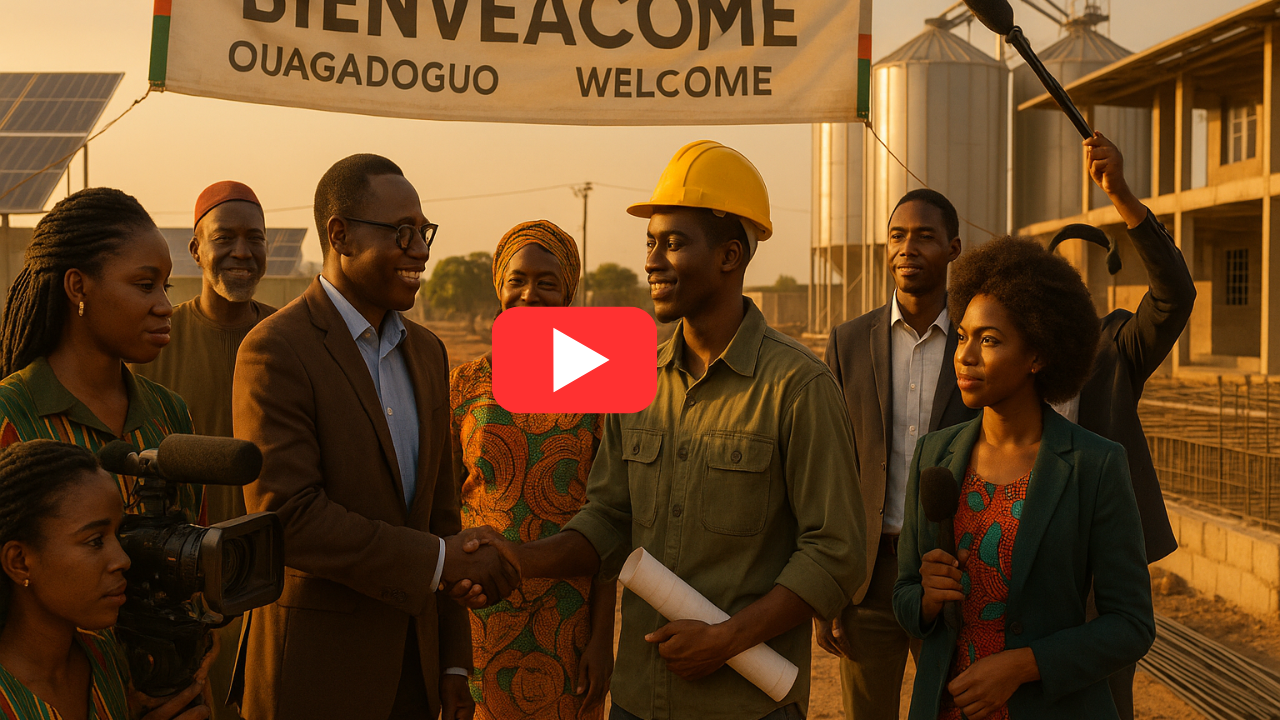
Burkina Faso’s message to the African diaspora is no longer symbolic—it’s operational. In a stirring address to a visiting delegation of African descendants, Captain Ibrahim Traoré paired moral clarity with policy moves: a fee waiver to secure permanent residency for the visiting cohort, explicit support for diaspora-owned media, and a direct invitation to invest across priority sectors poised for rapid growth. The net effect is simple and profound: come home, build with us, and help Africa tell its own story.
Traoré’s tone was grateful, disciplined, and urgent. He thanked elders who made the journey and asked all visitors to act as ambassadors against Western caricatures of Burkina Faso. “Our country is safe, standing tall, and alive,” he insisted—pushing back on a narrative that too often collapses an entire nation into a headline. He then moved beyond imagery to infrastructure: for this cohort, the financial condition for the permanent resident card would be lifted. That single gesture reframes the diaspora from sentimental guests to prospective stakeholders—people with a legal bridge to live, work, and invest.
Communication, he argued, is a weapon—and for too long it has been used against Africa. Traoré pledged to support the creation of diaspora-led radio and television in Burkina Faso, contending that only Africans can credibly narrate African reality. That matters. Capital follows confidence, and confidence follows credible media. If the diaspora’s talent pool brings editorial standards, audience reach, and brand safety to a Burkina-based broadcast ecosystem, you unlock an asset class that multiplies the value of every other sector.
Those sectors are tangible and immediate: real estate; agriculture and agri-processing; the broader agri-food industry; and energy. Burkina Faso, Traoré noted, is updating laws to protect investors, improve coexistence, and prime the country for value-addition—transforming raw materials to serve regional and global markets. The through-line is sovereignty by design. “We must feed the world,” he said, “not beg from it.” When a head of state ties policy to pan-African dignity and then assigns the Ministry of Foreign Affairs to guide and “channel” investors toward foundational opportunities—while monitoring execution to avoid disillusion—that’s a governance promise the diaspora can measure.
Beyond the mechanics, Traoré anchored his appeal in history and strategy. He acknowledged the depths of African suffering—from enslavement to colonization to the manipulations fueling conflict today—and then declared a doctrine: impossible is not African. He urged unity led by youth with the wisdom of elders, and he rejected the divide-and-rule patterns that still fracture Black progress across continents. This global Black unity, he suggested, is not only morally right—it’s economically efficient. Fragmentation keeps transaction costs high, brand narratives weak, and supply chains unintegrated. Unity reduces friction, crowds in capital, and shortens the distance between vision and build-out.
For African Americans and the wider diaspora, the path is increasingly clear. The residency offer reduces the legal friction of return. The media invitation creates narrative ownership. The sector map points to where the first movers can build moats. And a government-led investor concierge—if executed with transparency and speed—solves the “last mile” problem that has historically exhausted diaspora goodwill.
To make this real, diaspora executives, entrepreneurs, and creatives should organize themselves into three immediate lanes:
- Media & Narrative: Launch a Burkina-based newsroom and content studio that feeds a distributed network of diaspora channels. Focus on investor-grade reporting, supply-chain storytelling, and policy explainers that convert curiosity into commitment.
- Agri-Food Value Addition: Form joint ventures to aggregate inputs, deploy mid-market processing, and lock in off-take agreements. Tie this to export finance, climate-smart practices, and certification that unlocks premium markets.
- Residency-to-Enterprise Onramp: Stand up a “Residency & Build” cohort model—legal status + sector bootcamp + pre-screened projects—so each return trip produces bankable ventures, not just photo ops.
The moment is ripe because the invitation is specific. It is no longer a philosophical summons to “come back someday.” It is a near-term offer to live, invest, create media, and help a Sahel nation become a working proof-of-concept for pan-African development. If the diaspora wants measurable returns and meaningful belonging, this is what the blueprint looks like: a portable legal status, strategic sectors, a controlled narrative, and a state partner that promises to move obstacles—not just microphones.
The Economic Liberation of Africa requires these kinds of deals to be replicated and regionalized—across the Sahel and the continent. The fastest way to scale is to publish wins, codify playbooks, and hold both public and private partners to timelines. Burkina Faso has set the tone. The next step is execution—by the diaspora, with Burkina Faso, for Africa.
Join the conversation—leave your take or a question. Help grow The Economic Liberation of Africa conversation—forward to someone curious about Africa-centered opportunity.
Donate to GDN – Greater Diversity News | Subscribe – Greater Diversity News



No Comments so far
Jump into a conversationNo Comments Yet!
You can be the one to start a conversation.Only registered users can comment.