
Global Pan-African Unity and Its Power to Reshape Corporate DEI Practices
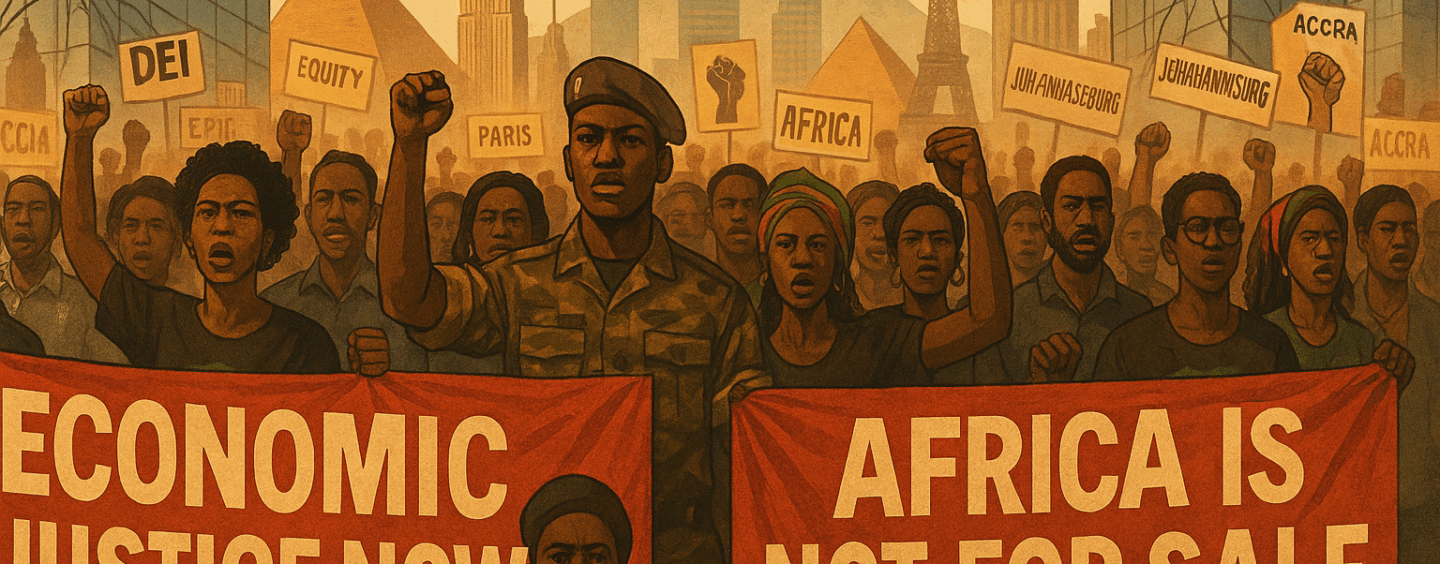
 On April 30, 2025, a historic wave of unity swept across cities around the world. Pan-
Africanists of all ages and backgrounds came together in mass demonstrations to
support Captain Ibrahim Traoré and the people of Burkina Faso. These synchronized
protests, spanning from the streets of Accra and Johannesburg to Paris, New York, and
London, were more than just an expression of solidarity with a revolutionary African
leader—they were a powerful reminder that Pan-Africanism is not only alive but
transforming into a global force with the potential to reshape how multinational
corporations (MNCs) approach Diversity, Equity, and Inclusion (DEI).
This rising wave of collective consciousness marks a turning point. It’s not just about
demanding justice in Africa—it’s about holding the global economic system
accountable. For multinational corporations that profit from African labor, resources, and
markets, the April 30 protests represent a significant wake-up call: DEI must expand
beyond symbolic gestures and Western-based initiatives to reflect real equity in global
operations—especially in Africa.
A Shift in Global Power Dynamics
The coordinated nature of the April 30 demonstrations showed the world that the Pan-
African movement is no longer fragmented by geography or ideology. A new generation
of Pan-Africanists is digitally connected, economically aware, and politically energized.
For multinational corporations, this represents a shift in power dynamics. Traditionally,
corporations could ignore local dissent in Africa as isolated or disconnected from global
economic consequences. That is no longer the case.
The massive turnout revealed that Pan-African voices—both on the continent and in the
diaspora—are not only linked by heritage but also by strategy. This unity holds
enormous potential to influence public perception, consumer behavior, and political
agendas. It places pressure on MNCs to reconsider their impact and legacy in African
nations.
Redefining DEI as a Global Standard
Historically, DEI has been treated as an internal corporate function—often focused on
HR policies, workplace diversity, or supplier inclusion programs in Western nations. But
April 30 signaled a new demand: DEI must become a global standard of corporate
ethics, not a localized PR campaign.
Multinational corporations must now be prepared to demonstrate how their African
operations reflect DEI values:
Are they empowering local talent and leadership?
Are they ensuring safe working conditions and fair compensation?
Are they investing in communities instead of merely extracting value?
Pan-African unity redefines DEI as a tool for economic justice, anti-colonial
resistance, and systemic reform. Corporations that fail to make this leap risk losing
credibility with an increasingly empowered global Black community.
The Economic Power of a Mobilized Diaspora
One of the most overlooked sources of influence is the economic potential of the African
diaspora. United, they represent a vast consumer and investment base. When politically
mobilized—as demonstrated on April 30—this base can become a formidable economic
force.
Imagine a coordinated Pan-African consumer boycott against corporations with
exploitative practices in Africa. Imagine collective investment initiatives prioritizing
Black-owned businesses and African start-ups. The possibility of leveraging this
economic power to demand corporate accountability is no longer hypothetical—it’s
within reach.
MNCs must now consider not just the local implications of their actions in African
countries but also the global ramifications. A reputational crisis in Kinshasa or
Ouagadougou can now lead to protests in Chicago, shareholder pressure in London,
and viral backlash on social media from Nairobi to Toronto.
Demands for Corporate Accountability and Reform
As Pan-African movements grow more organized and strategic, they will increasingly
challenge MNCs to:
Disclose employment data in African operations, including leadership
demographics.
Commit to equitable supply chains that include African-owned and Black
diaspora businesses.
Reinvest profits into community infrastructure, education, and environmental
sustainability.
Abandon exploitative contracts and neocolonial arrangements that enrich a few
while impoverishing many.
Already, initiatives are emerging that track corporate behavior in Africa and score
companies based on equity, transparency, and inclusion. This is only the beginning of a
more robust Pan-African corporate accountability movement.
Conclusion: A Moment of Reckoning
The global Pan-African demonstrations of April 30, 2025, were more than
symbolic—they were strategic. They revealed a rising consciousness and a
commitment to economic liberation that multinational corporations can no longer ignore.
DEI, if it is to remain relevant and credible, must evolve into a transnational ethic that
values African lives, labor, and leadership. Corporations must act now—by aligning their
African strategies with the principles of justice, fairness, and inclusion—or risk becoming
targets of a globalized and organized resistance.
In unity, Pan-Africanism has shown its ability to disrupt, inspire, and demand. The next
step is transformation. And multinational corporations would be wise to pay attention.
By Peter Grear – with AI assistance



No Comments so far
Jump into a conversationNo Comments Yet!
You can be the one to start a conversation.Only registered users can comment.