
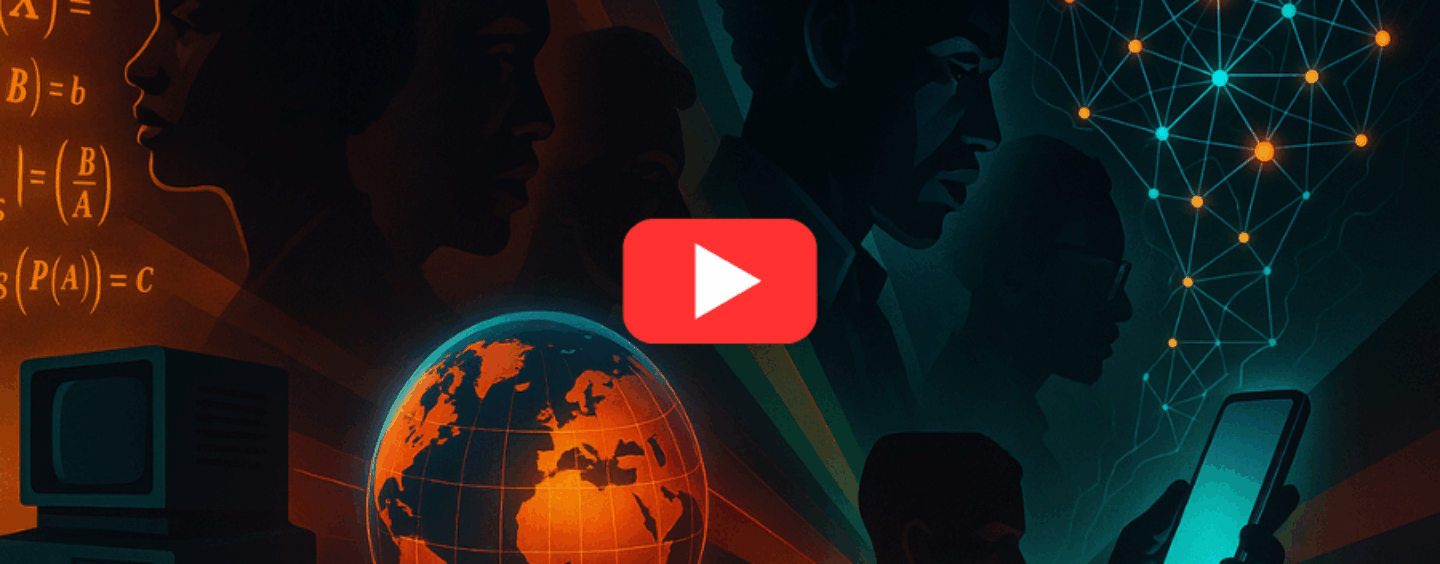
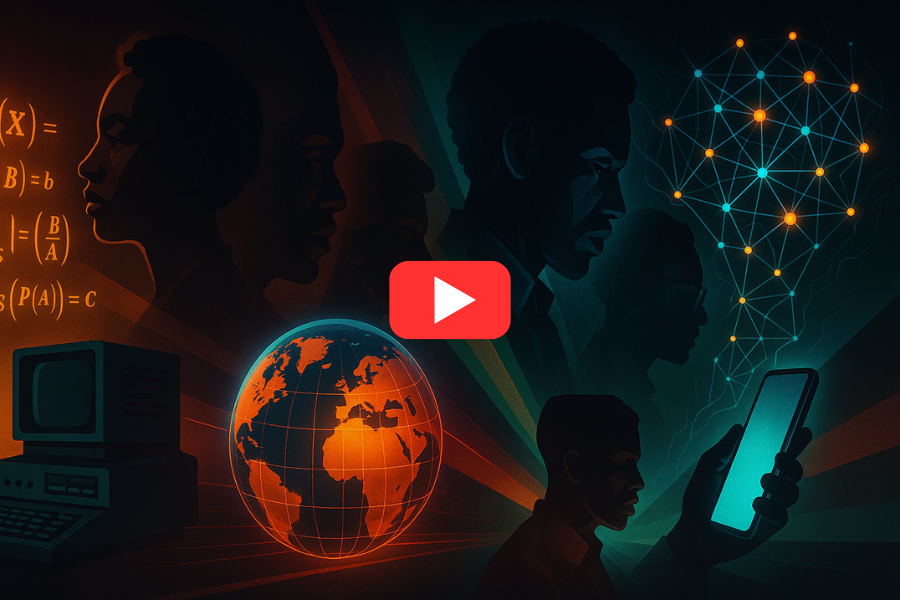
Hidden Architects of the Digital Age: Black Innovators Tech History Forgot
By Peter Grear with AI Assistance
Published: December 10, 2025
The digital age did not begin in Silicon Valley boardrooms, sleek modern labs, or billionaire garages. It began quietly—in classrooms that barely had resources, in segregated laboratories that denied credit, in government research centers shielded by classification, and in the brilliant minds of Black innovators who built the mathematical, computing, and engineering foundations that our modern world now stands on.
Yet when the world celebrates the architects of artificial intelligence, microcomputing, GPS, cybersecurity, or cloud collaboration, too often these names do not appear: David Blackwell, Clarence “Skip” Ellis, Gladys West, Mark Dean, Jerry Lawson, James E. West, Granville T. Woods. Their contributions are not side notes in history—they are the blueprint.
Today, as Greater Diversity News and The Economic Liberation of Africa movement focus on elevating African and African-diaspora ingenuity, recovering this buried legacy is more than historical correction. It is strategic. Because understanding the past reveals exactly how much brilliance the world has failed to recognize—and how much potential the Sixth Region holds for shaping the next era of global technology.
The Innovators Who Built the Infrastructure of Today’s Tech
David Blackwell: The Mathematical Father of Modern AI
Before AI became a trillion-dollar industry, it needed the statistical theories that allow machines to learn, predict, and optimize decisions. Those theories came from David Blackwell—one of the most important mathematicians of the 20th century. His work on dynamic programming, Bayesian inference, and game theory is the silent engine behind everything from search engines to cybersecurity algorithms.
Blackwell’s brilliance was so extraordinary that colleagues often said he was “thinking decades ahead of the field.” Yet his name rarely appears in mainstream tech narratives.
Gladys West: The Uncredited Mind Behind GPS
If you’ve ever used Google Maps, Uber, Lyft, DoorDash, or emergency response navigation—you have relied on the mathematical modeling of Gladys West. Her precise calculations of the Earth’s shape allowed GPS technology to emerge long before Silicon Valley realized it would change the world.
Her work is embedded in every smartphone, airplane, cargo ship, military operation, and logistics network. But her story was hidden for decades behind military classification.
Clarence “Skip” Ellis: The Inventor of Modern Collaboration
Before Google Docs, Dropbox Paper, or Microsoft 365 existed, Ellis designed the underlying system that allows multiple people to edit a document at the same time without overwriting each other. Today, billions of people rely on this functionality daily—from students completing group assignments to corporations executing global projects.
Ellis was the first African American to earn a Ph.D. in computer science, yet his name is nearly unknown in the digital collaboration economy he helped create.
Jerry Lawson: The Father of the Modern Gaming System
The video-game cartridge—the idea that players could insert and change games—was invented by Lawson. Without him, the gaming industry would look nothing like it does today. His vision created the economic model that made gaming interactive, accessible, and profitable.
Today, gaming is a $200+ billion industry. Lawson’s impact is immeasurable, but too often unspoken.
Mark Dean & James E. West: Hardware That Makes the World Work
Mark Dean helped design the IBM personal computer and co-created the first color monitor. James West invented the electret microphone—now used in 90% of all phones, cameras, and smart devices.
Without their work, handheld technology would not exist as we know it.
Why Their Erasure Still Matters
The absence of these innovators from mainstream narratives does more than distort history—it diminishes the pipeline for future Black talent. When students do not see themselves in the story of technology, the story begins to feel closed to them.
But even more importantly, this erasure hides the global opportunity that African nations and the diaspora now face. Africa is poised to become the world’s next major tech frontier. The Sixth Region movement positions the diaspora as a full stakeholder in that future. Reclaiming this legacy of innovation expands the imagination of what is possible.
Black brilliance has always been part of the digital age. The world simply wasn’t taught to see it.
A Call to Action
As we launch this series through Greater Diversity News and The Economic Liberation of Africa platform, we invite readers to:
- Share this article with educators, students, and professionals
- Support the GDN mission to uplift African and diaspora innovation
- Donate to GDN – Greater Diversity News
- Subscribe – Greater Diversity News
- Join the conversation—leave your take or a question
- Help grow The Economic Liberation of Africa conversation—forward to someone curious about Africa-centered opportunity
This is our moment to reclaim the narrative and rebuild a future worthy of our past.



No Comments so far
Jump into a conversationNo Comments Yet!
You can be the one to start a conversation.Only registered users can comment.