
“I won’t be sold”: The Slave Woman Who Challenged Illinois in 1827
 In 1813, Nance Legins-Costley was born a slave in Illinois, a supposedly “free” territory. The catch?
A legal loophole let existing slaves stay enslaved through 99-year “contracts. ” When auctioned in 1827, Nance boldly said “No!” and got beaten and locked up for her defiance. Years later, a young lawyer named Abraham Lincoln took her case to the Illinois Supreme Court.
In 1841, two decades before the Civil War, Lincoln won by arguing “every person is free, without regard to color. ” This landmark case freed Nance and her children while closing Illinois’ slavery loophole.
The Old State Capitol where Lincoln made this historic argument still stands in Springfield today.
Nance Legins was born in December 1813 at Thomas Cox’s boarding house in Kaskaskia. The Illinois Territorial General Assembly met in the same building.
A baby born into slavery in a territory where slavery was supposedly banned. Her parents, Randall and Anchy Legins, came from Maryland and belonged to Colonel Cox.
Lawmakers who ran the “free” territory ignored slavery happening right under their noses through legal loopholes.
The Northwest Ordinance of 1787 clearly banned slavery in the territory. But local leaders twisted the meaning: the law only stopped new slaves from coming in.
They created “indentured servitude” contracts lasting up to 99 years – just slavery with a different name. When Illinois became a state in 1818, the constitution let existing slavery continue.
The contracts needed signatures, but nobody cared about that rule.
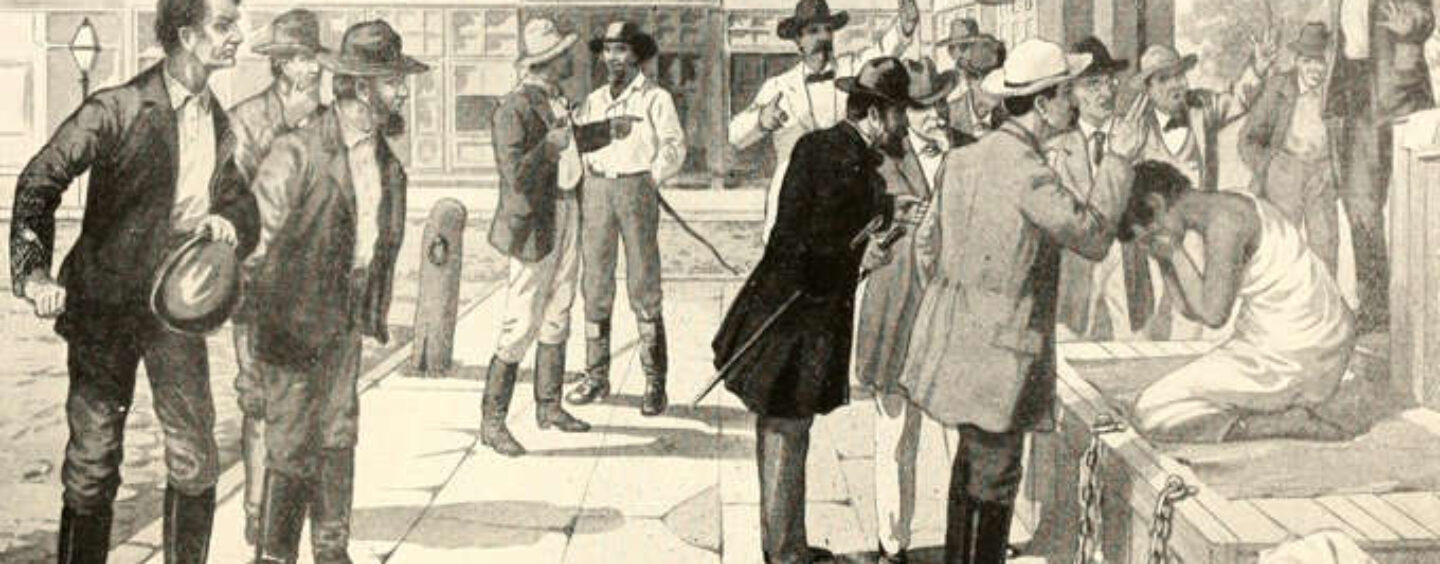
When they auctioned Thomas Cox’s estate in 1827, 14-year-old Nance stood on the auction block in Springfield. She boldly refused to sign her contract and shouted “No!” in front of everyone. A county officer beat her and locked her alone in a log shed for six days.
Nathan Cromwell still bought her for $151, even without her agreement. Her bravery at such a young age showed her fighting spirit.
Cromwell moved Nance from Springfield to the new town of Pekin. She worked as a house servant while he chased business deals.
Nance never stopped saying she should be free and refused to act like property. As years passed, Cromwell planned to move to Texas.
In 1836, he tried to sell Nance to David Bailey for $400. This sale later sparked a major legal case.
After David Bailey agreed to buy Nance, she simply walked away and declared herself free. Bailey, who fought with Abraham Lincoln in the Black Hawk War, held anti-slavery views and let her live freely.
Then Cromwell suddenly died in St. Louis while traveling to Texas.
He left no legal papers proving Nance belonged to anyone. This missing paperwork created the perfect chance to challenge her status.
Between 1836 and 1840, Nance lived as a free woman in Pekin. She worked for wages, bought things, and took on debts in her own name.
In October 1840, she married Benjamin Costley, a free Black man. They started a family with three children: Amanda, Eliza Jane, and William Henry.
She made her own choices and built a life despite the legal questions about her status.
Cromwell’s estate sued Bailey in 1838 for the unpaid $400 note. The lower court ruled against Bailey, counting Nance as property that could be legally sold.
Bailey refused to pay, arguing nobody proved Nance was ever a slave. He took the fight to the Illinois Supreme Court in fall 1839.
The case asked a simple question: can someone sell a person without proof they’re a slave?
Bailey asked his old war buddy Abraham Lincoln for legal help. Lincoln, just 32 years old and serving his fourth term in the Illinois legislature, took the case.
He spent months studying legal precedents and the exact words of the Northwest Ordinance. This became Lincoln’s first major legal fight against slavery, twenty years before the Civil War.
The young lawyer saw a chance to attack the system that kept people unfree.
On July 9, 1841, Lincoln stood before the Illinois Supreme Court in Springfield’s St. Paul’s Episcopal Church.
He argued that “every person is free, without regard to color.” Lincoln claimed the Northwest Ordinance and Illinois Constitution created a starting point of freedom for everyone. Cromwell’s estate needed to prove Nance was legally enslaved.
Without proper papers, she must be considered free under the law.
Justice Sidney Breese announced the court’s decision on July 23, 1841. The ruling supported Lincoln’s reasoning: “the sale of a free person is illegal.”
The court noted Nance had lived freely for years. This landmark decision freed Nance and her three children from any claim of servitude.
The ruling closed the loophole that allowed slavery to continue in Illinois through indentured servitude.
Nance Legins-Costley became the first slave freed by Abraham Lincoln, twenty years before the Emancipation Proclamation.
The legal principles established in her case helped end the indentured servitude system throughout Illinois. Lincoln later referenced this case in his famous 1854 Peoria speech against the spread of slavery.
Nance and her children became the first of eventually four million people freed through Lincoln’s legal and presidential actions.
Their freedom came from a courtroom battle rather than a battlefield, but proved just as significant in American history.
You can learn about Lincoln’s early fight against slavery at the Old State Capitol at 1 S. Old State Capitol Plaza in Springfield.
The building has the restored 1840s Illinois Supreme Court chamber where Lincoln won freedom for Nance Legins-Costley. Admission is free with suggested donations.
It’s open Tuesday through Saturday from 9am to 5pm. You can take self-guided tours or join guided ones without reservations.
Written by Leo Heit



No Comments so far
Jump into a conversationNo Comments Yet!
You can be the one to start a conversation.Only registered users can comment.