
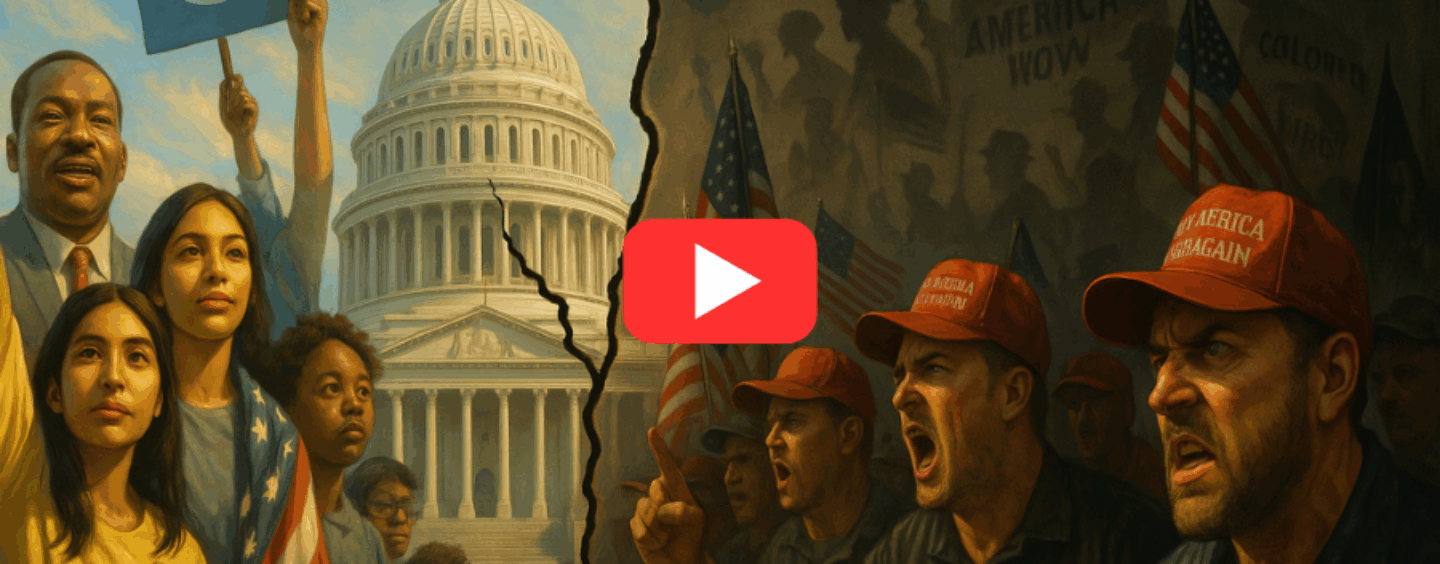
MAGA and the Myth of a Post-Racial America
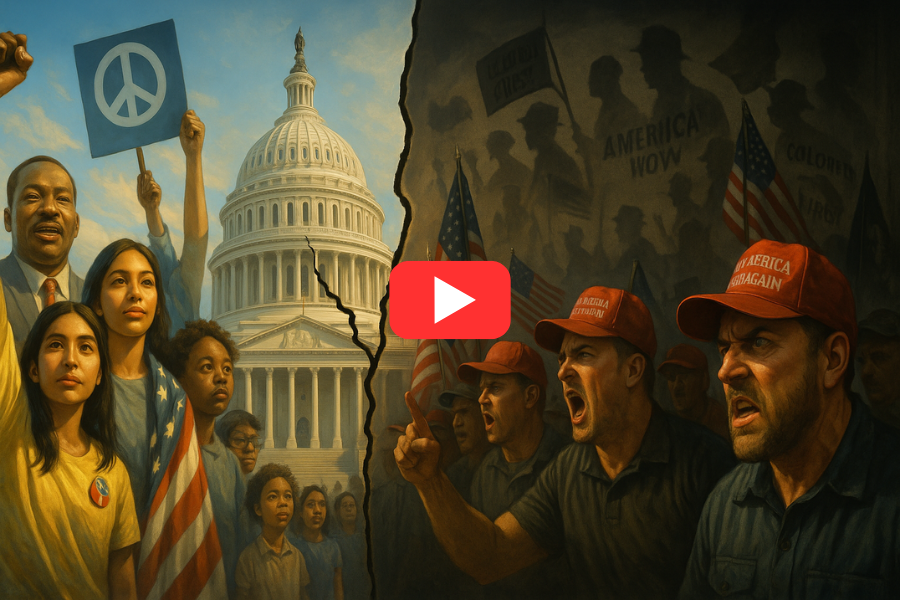
By Peter Grear, with AI assistance
December 15, 2025
For more than a decade, political commentators have debated whether America entered a “post-racial” era after the election of Barack Obama. The idea suggested that the nation had matured beyond racial hierarchy, that progress was linear, and that structural inequality was fading into history. But the rise of the MAGA movement—rooted in nostalgia, grievance politics, and reaction to demographic change—has shattered that illusion. Instead of confirming post-racial progress, MAGA has revealed just how deeply race continues to shape political identity, institutional power, and national belonging in the United States.
At its core, the phrase “Make America Great Again” evokes a longing for an earlier era. Yet for Black Americans, immigrants, Indigenous communities, and other marginalized groups, the past was not a time of greater inclusion or equality. MAGA’s nostalgic framing therefore raises an essential question: Which America is being remembered as “great,” and for whom? When examined closely, the movement’s rhetoric and policy priorities mirror older patterns of racial exclusion that contradict any notion of a society beyond race.
Political scientists widely agree that MAGA is driven in part by anxiety about America’s demographic transition. As the nation becomes more diverse, a segment of the population experiences this change as cultural loss or displacement. MAGA channels those fears into a political force, re-centering white identity politics even when race is not explicitly mentioned. Policies framed as “law and order,” “border security,” or “anti-woke” often operate as coded language reinforcing racial and cultural boundaries.
This dynamic directly undermines the idea of a post-racial America. A society that has moved “beyond race” would not experience demographic diversity as a threat. Nor would it respond to discussions of systemic racism with backlash, dismissal, or censorship. Yet MAGA-aligned leaders routinely portray racial-justice work as unpatriotic, divisive, or inherently anti-white. Diversity programs are cast as discrimination. Teaching history—including slavery, Jim Crow, redlining, or police violence—is reframed as ideological indoctrination. These attacks do not emerge from a nation that has left racial hierarchy behind; they emerge from a nation wrestling with racial power in real time.
Policy choices reinforce this reality. In recent years, MAGA influence has helped accelerate rollbacks of DEI programs, voting-rights protections, federal oversight of discriminatory policing, fair-housing enforcement, immigrant protections, and school-curriculum diversity. Many such policies disproportionately impact Black communities—even when drafted in race-neutral language. The effect is a quiet but powerful re-inscription of racial inequality into public institutions.
Ironically, the movement’s rise has also sparked a renewed wave of racial-justice activism—especially among young people. Black student organizations, Pan-African networks, diaspora youth movements, and multiracial coalitions have grown more vocal in response to MAGA-era policies and rhetoric. Far from accepting a “post-racial” myth, this generation openly rejects it, insisting on confronting long-standing disparities in wealth, health care, education, and political power. The movement intended to silence conversations about race has instead intensified them.
Internationally, MAGA has weakened America’s claim to moral leadership. African nations, Caribbean governments, and the global diaspora increasingly question U.S. commitment to human rights when domestic politics re-center racial hierarchy. For communities aligned with the African Union’s Sixth Region vision, MAGA is seen not simply as a political moment but as a reminder of America’s unfinished struggle with race.
Ultimately, MAGA’s greatest impact on the “post-racial” idea may be its clarity. For years, many leaders preferred to believe that racism was fading naturally, requiring only patience rather than structural repair. MAGA exposed this as wishful thinking. Race is not a closed chapter—it is a living force shaping who belongs, who is protected, who is represented, and who is believed.
A genuine post-racial America is possible someday. But it cannot be built through nostalgia, erasure, or exclusion. It requires truth-telling, structural change, and a commitment to equality that transcends political cycles. MAGA did not create America’s racial fault lines, but it made them impossible to ignore. And in that exposure lies an opportunity: to redefine greatness not as a return to the past, but as a future where dignity is not rationed and citizenship is not conditional.
Donate to GDN – Greater Diversity News | Subscribe – Greater Diversity News
Join the conversation—leave your take or a question.
Help grow The Economic Liberation of Africa conversation—forward to someone curious about Africa-centered opportunity.



No Comments so far
Jump into a conversationNo Comments Yet!
You can be the one to start a conversation.Only registered users can comment.