
Students and the Right of First Refusal: Building the Next Generation of Pan-African Leadership
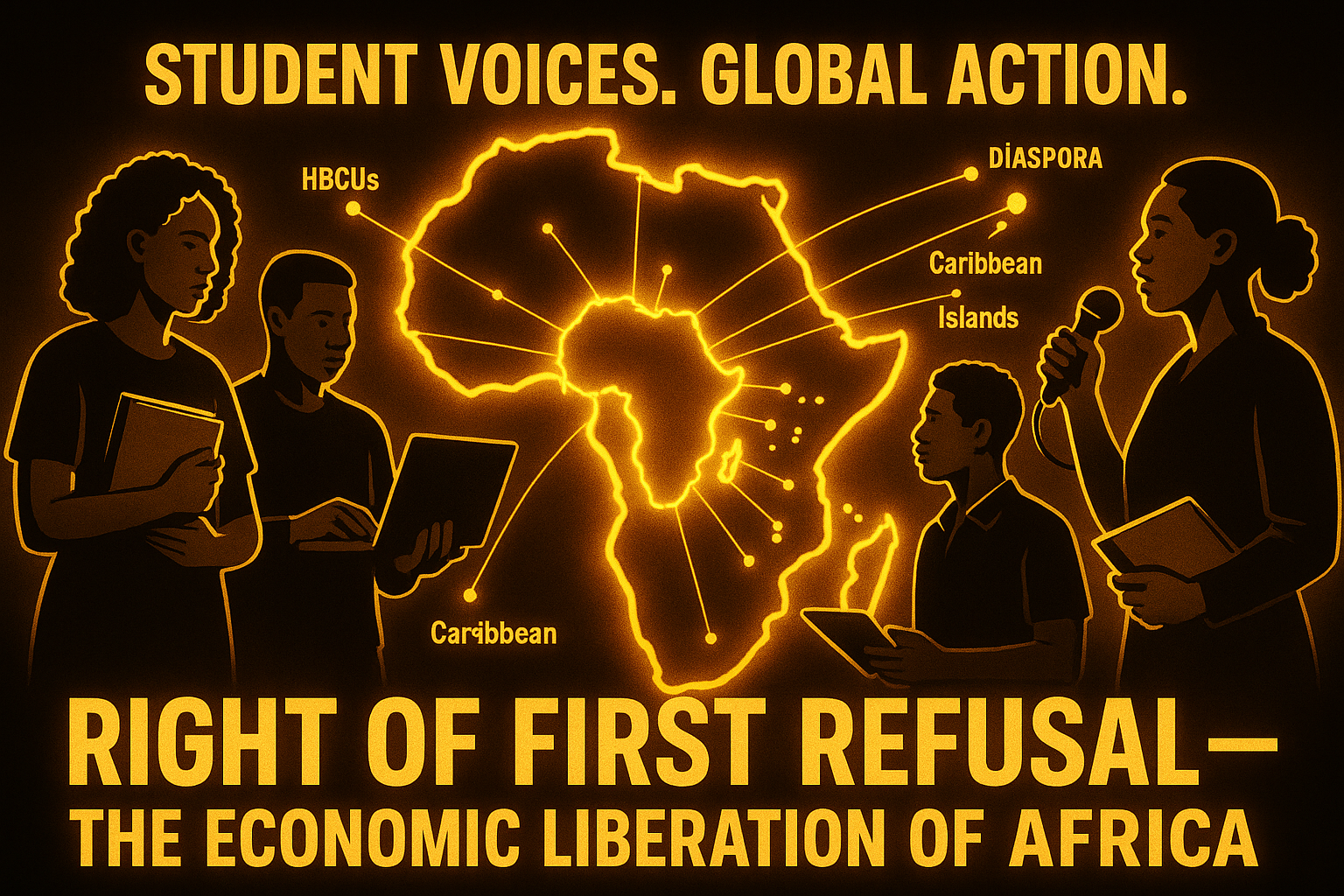
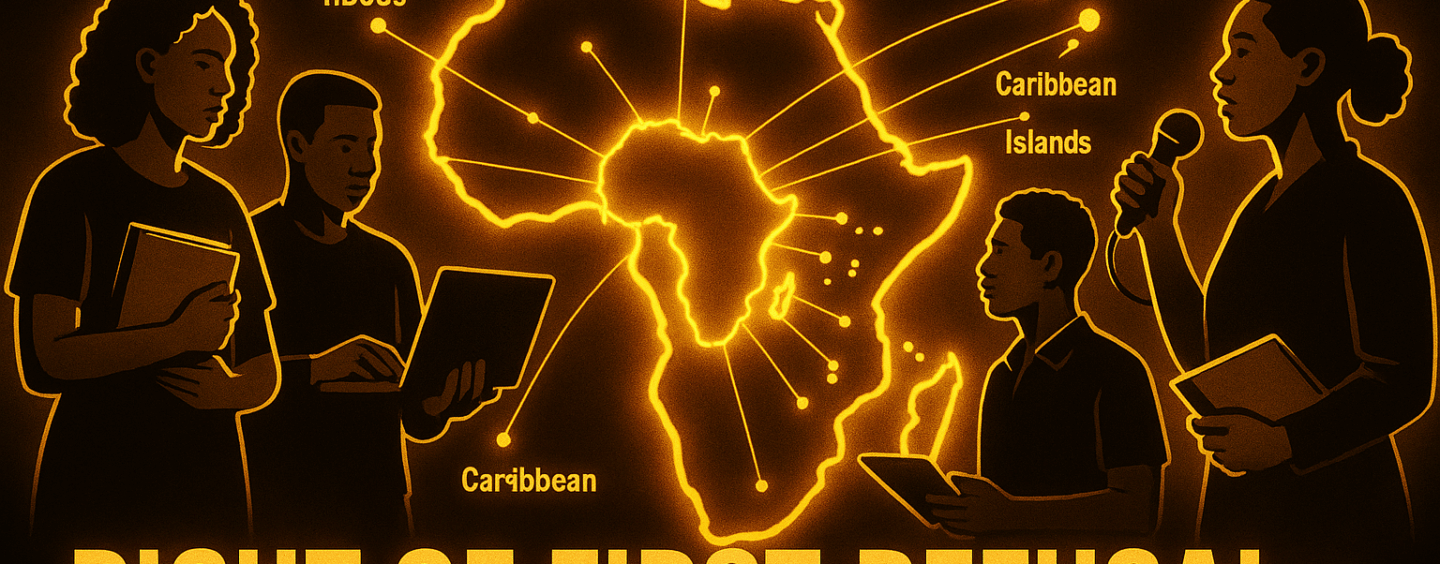
Students across Africa and the diaspora are standing at the crossroads of history. They are the heirs to centuries of struggle and the stewards of a new era defined by African-led development. Among the most powerful tools now emerging to secure Africa’s economic future is the Right of First Refusal (RoFR) — a principle that insists African nations and their diaspora must have the first opportunity to benefit from Africa’s resources and opportunities before foreign corporations or governments step in.
The RoFR is more than a policy. It is a declaration that Africa’s wealth must serve its own people. It is a safeguard against the continuation of economic exploitation and a blueprint for building global Black prosperity. And students — particularly Black students in the U.S., Africa, and worldwide — are uniquely positioned to champion this cause.
Why Students Matter to RoFR
Students are historically among the most active voices for justice. From the Civil Rights Movement in the United States to anti-colonial struggles in Africa, student movements have often been the spark that ignites change. Today, they can do the same for RoFR.
- Awareness and Advocacy: Students are plugged into social justice campaigns and know how to mobilize their peers. Through campus organizations, Pan-African clubs, and student governments, they can popularize RoFR in ways that established institutions cannot.
- Education and Research: Business, law, and economics students can study RoFR as a legal, financial, and policy tool. By producing case studies and policy models, they contribute intellectual capital to make RoFR a practical reality.
- Innovation: Tech-savvy students can design digital tools that connect African governments with diaspora-owned businesses, ensuring RoFR processes are transparent and efficient. This kind of innovation could help RoFR succeed where traditional contracting processes have failed.
How Students Can Engage with RoFR
The possibilities for student action are as diverse as the global Black experience.
- Campus Forums and Teach-ins: Universities can host events that explore RoFR’s history and its role in Africa’s economic sovereignty. Professors, activists, and entrepreneurs can be invited to explain how RoFR aligns with Pan-African goals.
- Policy Papers and Research Projects: Students can work with think tanks or diaspora organizations to publish papers advocating for RoFR in key sectors such as energy, agriculture, or technology. This scholarship can directly influence policymakers.
- Diaspora Linkages: African students abroad can form cross-border RoFR committees with peers in the U.S. and Caribbean, building Pan-African solidarity and coordinated advocacy efforts.
- Internships and Volunteering: By working with organizations like the African Diaspora Development Institute (ADDI), Black Wall Street USA, or Greater Diversity News (GDN), students can gain hands-on experience while pushing forward real-world campaigns.
Building the Student RoFR Initiative
To give these efforts structure, the Student RoFR Initiative is emerging as a new project under the GDN ecosystem. Its mission is clear: to educate, mobilize, and empower students across Africa and the diaspora to advance RoFR as a framework for economic liberation and diaspora-first development.
The initiative envisions:
- National Committees on HBCU campuses, African universities, and diaspora student unions.
- A Global Advisory Board made up of faculty mentors, Pan-African leaders, and GDN editors.
- Student Ambassadors at each campus who coordinate events, publish media, and engage peers.
The first-year roadmap includes launching with a GDN feature article and YouTube video, recruiting ambassadors, hosting teach-ins, publishing research briefs, and convening the first Pan-African Student RoFR Summit.
The Role of GDN
Greater Diversity News serves as the official media partner of this movement. Through its print edition, weekly eNewsletters, YouTube channel, and podcast, GDN can amplify student voices to global audiences. Students will have access to a ready-made platform where they can:
- Publish op-eds, blogs, and video commentaries on RoFR.
- Share reports on campus activities and advocacy campaigns.
- Remix GDN content for social media campaigns targeting their peers.
This partnership ensures student voices are not confined to campus walls but resonate across the diaspora and Africa itself.
Long-Term Impact
The engagement of students in RoFR is not just about learning — it is about leadership. By anchoring their future in RoFR, students help create a world where Africa’s resources are protected, diaspora businesses thrive, and global Black prosperity becomes the norm rather than the exception.
This is their opportunity to turn theory into practice, protest into policy, and dreams into reality. Just as students of earlier generations stood on the frontlines of civil rights and independence, today’s students can lead the charge for Africa’s economic sovereignty.
Call to Action
The Student RoFR Initiative is open to all who believe in the power of youth leadership and Pan-African solidarity. Students, faculty, and organizations are invited to:
- Submit op-eds, blogs, and videos to GDN.
- Volunteer as campus ambassadors.
- Sponsor research, forums, and policy papers.
- Support the campaign financially through donations to the GDN RoFR fund.
Together, we can make RoFR not just a principle but a practice. And in doing so, we can ensure that Africa’s wealth finally works for African people and their descendants.
Join us today in advancing the Right of First Refusal through student leadership. The time to act is now. Support the Student RoFR Initiative through Greater Diversity News and be part of The Economic Liberation of Africa.



No Comments so far
Jump into a conversationNo Comments Yet!
You can be the one to start a conversation.Only registered users can comment.