

Taste Africa, Build Africa: Turning Coffee and Cocoa into Acts of Pan-African Solidarity
By Peter Grear, with AI Assistance
September 30, 2025
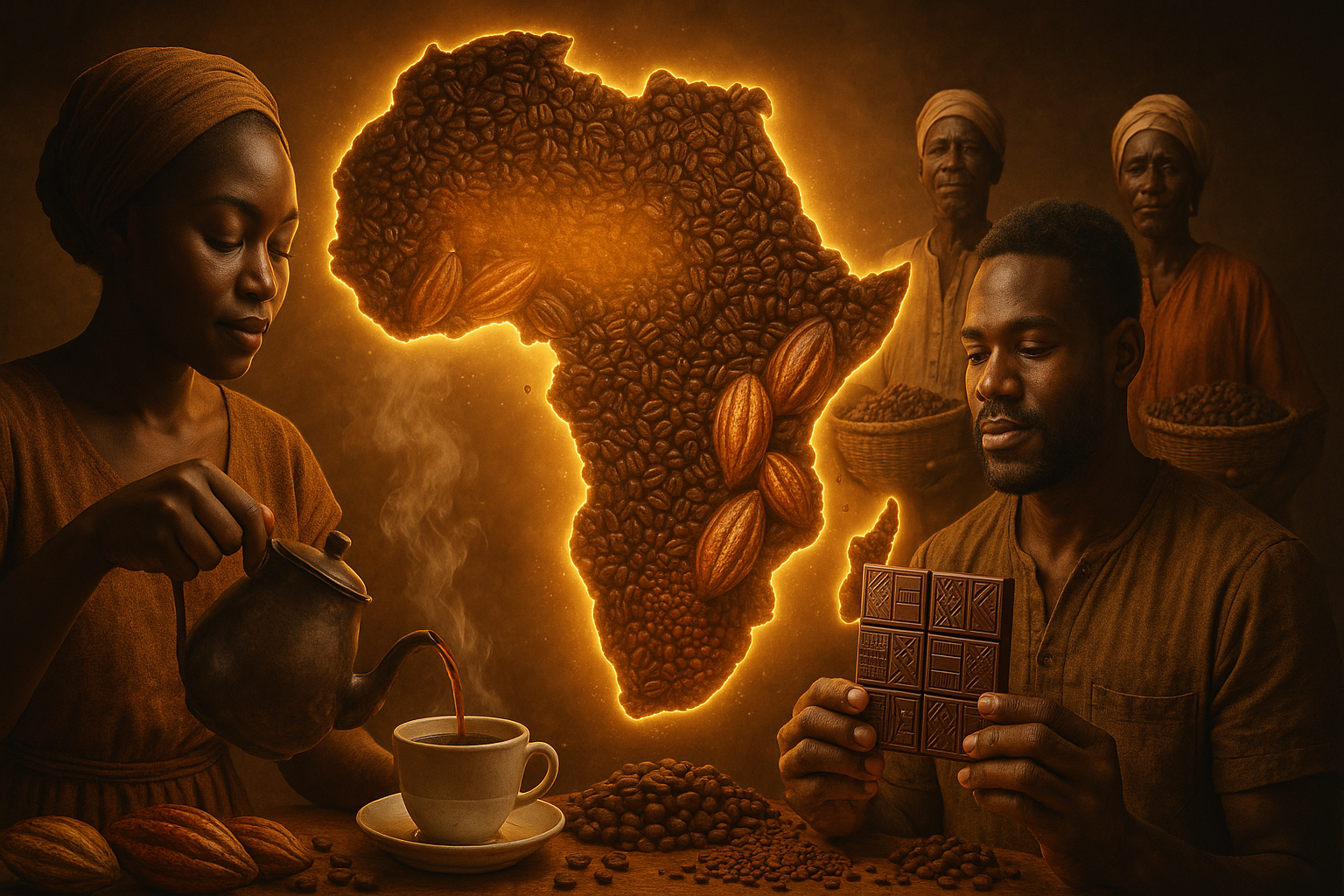
When most people drink their morning coffee or enjoy a piece of chocolate, they rarely think about where it comes from. They may not realize that Africa is the birthplace of coffee and the leading producer of cocoa. They may not consider that behind every cup or bar is the labor of millions of African farmers. But for the global African diaspora, these products are not just beverages or treats — they are opportunities. Opportunities to reclaim history, to redirect wealth, and to stand together in a new era of Pan-African solidarity.
That is the vision behind the campaign “Taste Africa, Build Africa.” The initiative reframes coffee and cocoa not simply as consumer goods, but as tools of liberation, wealth redistribution, and cultural pride. It asks a simple question: if the diaspora spends billions every year on coffee and chocolate, why shouldn’t those dollars build African prosperity instead of fueling multinational corporations that extract wealth from the continent?
From Commodity to Community
Africa produces more than 70% of the world’s cocoa and is home to some of the most prized coffee regions, from Ethiopia’s highlands to Uganda’s robust beans. Yet the paradox is staggering: African farmers often receive pennies on the dollar while foreign corporations pocket the lion’s share. In Ghana and Côte d’Ivoire — the world’s top cocoa producers — farmers typically earn less than a dollar a day.
“Taste Africa, Build Africa” challenges diaspora consumers to change this equation. By deliberately choosing African-sourced coffee and cocoa, diaspora buyers can ensure that a greater share of value stays in Africa. This transforms an ordinary purchase into an extraordinary act of economic resistance. Every sip becomes a vote for justice; every bite becomes a transfer of wealth back to the communities that nurture these crops.
Reclaiming Cultural Roots
Coffee was first discovered in Ethiopia, where it remains a central part of cultural life. Cocoa has been cultivated in West Africa for generations, woven into rituals, economies, and family livelihoods. For Africans and the diaspora, these are not imported luxuries — they are part of our heritage.
The campaign emphasizes this cultural connection. To drink African coffee or enjoy Ghanaian chocolate is not only to consume, but to remember. It is to acknowledge the farmers whose ancestors perfected these crops and to honor the stories behind them. It is a call to reclaim what colonial systems commodified, and to find pride in choosing products that reflect our roots.
Building Diaspora Wealth
The campaign goes beyond sentiment. It speaks to strategy. When diaspora consumers choose Africa-sourced products, they are not only supporting farmers — they are strengthening a value chain that can grow into diaspora wealth. More exports mean more opportunities for African entrepreneurs, diaspora distributors, and Pan-African partnerships.
Imagine this: a young entrepreneur in Atlanta distributes Ethiopian coffee to Black-owned cafés. A Ghanaian American family launches a chocolate brand sourced directly from Ghanaian cooperatives. Diaspora chambers of commerce negotiate trade partnerships to bring Africa’s finest products into mainstream U.S. markets. Each link in the chain creates jobs, income, and ownership within the global African family.
A Movement, Not Just a Marketplace
“Taste Africa, Build Africa” is not a slogan — it is a movement. Through platforms like Greater Diversity News (GDN), the campaign integrates across print, newsletters, podcasts, YouTube, and community events. Readers will see farmer profiles in the monthly publication. Subscribers will receive special offers through e-newsletters. Podcast listeners will hear stories of how cocoa cooperatives in Ghana are transforming lives. YouTube viewers will watch taste-test panels and history lessons that highlight Africa’s role in the global coffee and chocolate industries.
This multi-channel approach ensures that the campaign is more than promotion — it is education, inspiration, and mobilization. It reminds the diaspora that consumption can be activism, and that solidarity can be practiced daily, one cup and one bar at a time.
The Call to Action
In a world where multinational corporations control markets and dictate terms, the diaspora has the power to create its own economy of solidarity. The choice is simple but profound: continue buying coffee and chocolate that perpetuate inequality, or redirect that purchasing power toward Africa-sourced alternatives that build wealth where it matters most.
The next time you brew your morning coffee or unwrap a piece of chocolate, ask yourself: Am I fueling exploitation, or am I investing in liberation?
With “Taste Africa, Build Africa,” we can make sure that every diaspora household participates in Africa’s economic rise. Together, we can transform the world’s most beloved products into engines of freedom.
Support GDN and The Economic Liberation of Africa. Subscribe to our newsletter, donate, and join us in building a Pan-African economy rooted in fairness, solidarity, and pride.



No Comments so far
Jump into a conversationNo Comments Yet!
You can be the one to start a conversation.Only registered users can comment.