
The Future of Black College Graduates in Post-DEI America
By Peter Grear, AI assisted
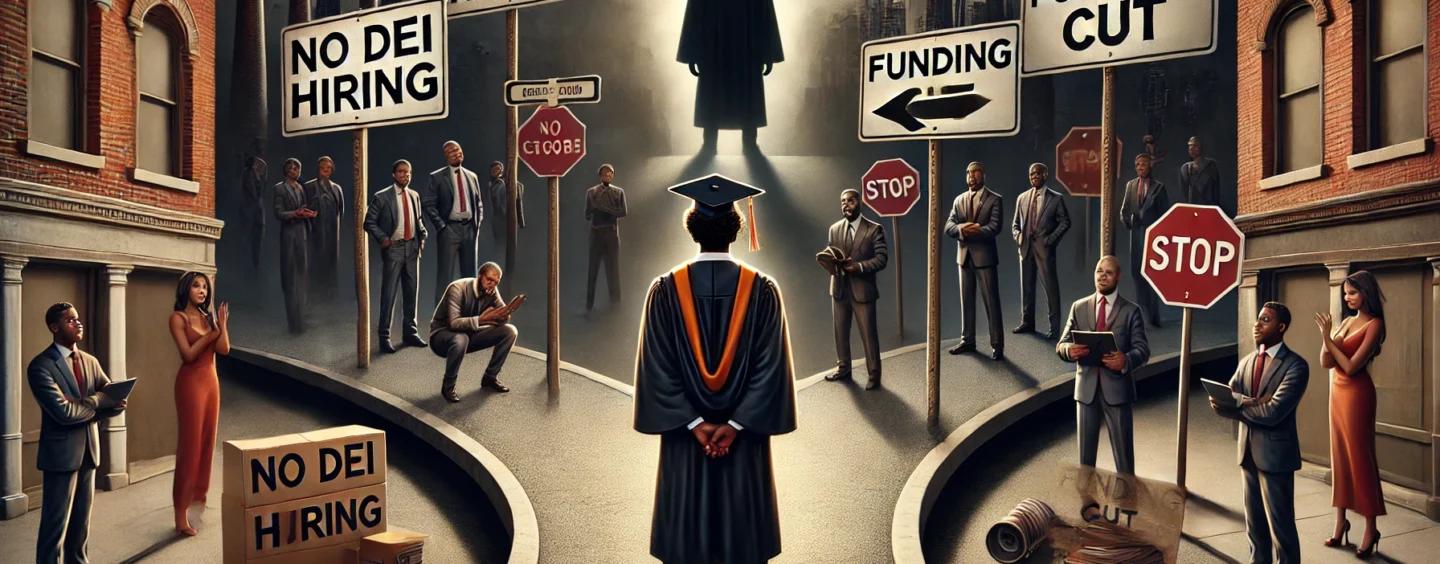
(Wilmington, NC) The rollback of Diversity, Equity, and Inclusion (DEI) initiatives across the United States is poised to have a profound and lasting impact on Black college graduates. As anti-DEI sentiment spreads, corporations, universities, and government agencies are dismantling programs that once provided a pathway to economic mobility for underrepresented communities. Without these protections, Black graduates will face heightened barriers in employment, entrepreneurship, higher education, and career advancement.
The consequences will not just affect individuals but will contribute to wider economic disparities, reinforcing the racial wealth gap and limiting social mobility. Understanding the effects of these rollbacks is essential for Black professionals, educators, policymakers, and activists seeking to counteract the negative outcomes.
Fewer Job Opportunities and Slower Career Advancement
One of the most immediate effects of the DEI backlash is the shrinking number of opportunities for Black professionals in corporate America. Many major companies that once touted diversity initiatives are now eliminating programs aimed at recruiting and supporting Black employees.
Hiring diversity programs are disappearing, making it harder for Black graduates to secure competitive jobs. Corporate mentorship and sponsorship networks are declining, reducing the chances of Black professionals moving into leadership roles. Workplace discrimination may increase, as the removal of DEI policies allows biased hiring and promotion decisions to go unchecked. Without affirmative action in hiring and strong DEI commitments, Black college graduates will face a steeper climb to career success, particularly in high-paying industries like tech, finance, and law.
Shrinking Opportunities for Black Entrepreneurs
Beyond traditional employment, Black-owned businesses have historically benefited from DEI-driven supplier diversity programs, which ensured corporations worked with Black vendors and entrepreneurs. As DEI is dismantled, these opportunities will decline, leading to: Fewer corporate partnerships and supplier contracts for Black-owned businesses.
Decreased access to venture capital and funding that previously prioritized minority entrepreneurs. Greater economic isolation, as companies scale back efforts to engage with Black business networks. Black graduates interested in entrepreneurship will need to find alternative financial resources and networks to replace what DEI-focused corporate initiatives once provided.
A Less Diverse Higher Education Landscape
Higher education is also seeing the consequences of the DEI rollback, particularly with the end of affirmative action in college admissions. This means: Declining enrollment of Black students in elite universities as race-conscious admissions policies disappear. Reduction in scholarships and financial aid targeting Black students. A less inclusive campus environment, discouraging Black students from pursuing fields with historically low representation, such as STEM and law. With fewer Black students gaining access to top-tier institutions, the long-term effect will be a widening racial gap in educational attainment and professional achievement.
The Growing Economic Disparities
Without DEI protections in hiring, business support, and education, the racial wealth gap is likely to expand. Studies already show that Black workers earn less than their white counterparts, and the dismantling of DEI will reinforce this pattern: Fewer promotions for Black professionals due to the elimination of diversity leadership initiatives. Lower starting salaries for Black graduates, as companies reduce commitments to pay equity. Increased workplace discrimination, with fewer legal protections enforcing corporate accountability.
The long-term result will be a deepening cycle of economic inequality, with fewer Black families able to build generational wealth through career advancement and business ownership.
The Path Forward: Strategies for Black Graduates
Despite these challenges, Black professionals and communities must develop strategies to adapt and thrive in a post-DEI era. Some key actions include:
✅ Building and Expanding Black-Owned Businesses – Supporting Black entrepreneurs and prioritizing Black-owned institutions will help create self-sufficient economic ecosystems.
✅ Leveraging Pan-African Economic Networks – The dismantling of DEI in America presents an opportunity for Black graduates to look beyond U.S. markets, forming business and investment ties with Africa, the Caribbean, and other regions.
✅ Pushing for New Policy Changes – Although DEI policies are under attack, Black communities must remain politically active, advocating for state and federal protections that support economic inclusion and fairness.
✅ Developing Alternative Education & Career Pipelines – Strengthening HBCUs, professional networking organizations, and independent Black-led business incubators can help fill the gap left by disappearing DEI programs.
Conclusion: The Future is in Our Hands
The dismantling of DEI represents a deliberate step backward, returning to a time when Black professionals had to fight harder for every opportunity. However, history has shown that Black resilience, innovation, and community solidarity can overcome systemic barriers. Rather than relying on institutions that continue to push exclusionary policies, Black graduates must take control of their economic future by building independent financial structures, investing in their own communities, and fostering global partnerships that promote Black economic liberation.
The question is no longer if discrimination will increase—it is how Black professionals will organize and adapt in response. The future remains unwritten, but one thing is clear: Black economic power will only grow if Black communities take ownership of it.



No Comments so far
Jump into a conversationNo Comments Yet!
You can be the one to start a conversation.Only registered users can comment.