

The Second Civil Rights Movement: Black Communities Mobilize Against DEI Attacks and Global Economic Exploitation
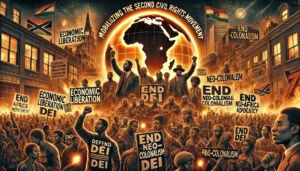
By Peter Grear, AE assisted
(Wilmington, N.C.) – A growing movement is taking shape as activists, scholars, and students rally against the systematic dismantling of Diversity, Equity, and Inclusion (DEI) initiatives across the United States. But what many see as a domestic issue is in fact part of a larger, global economic strategy to maintain racial hierarchies and suppress Black economic power.
Rev. Al Sharpton and Roland Martin, responding to the dismantling of DEI suggested that Black communities and leaders consider an appropriate response. This article resulted from my considerations.
As corporations scale back their commitments to DEI, the consequences extend far beyond American workplaces and universities. Experts warn that the rollback of DEI policies is directly tied to the wider economic marginalization of Black communities worldwide struggle deeply connected to neo-colonialism in Africa and the continued exploitation of Black labor and resources.
The DEI Rollback: A Coordinated Effort to Undermine Black Progress
Over the past year, conservative-led political campaigns have targeted DEI programs, labeling them as unnecessary or divisive. Major corporations, including Walmart and other Fortune 500 companies, have responded by quietly scaling back their diversity efforts, reversing decades of progress aimed at leveling the playing field for marginalized groups.
“What we’re seeing is a deliberate effort to erase the economic and social gains Black communities have fought for,” said Gerry McCants, a Pan-Africanist and economic justice advocate. “This isn’t just about DEI in America. This is about ensuring that the wealth Black people generate worldwide remains in the hands of those who have historically controlled it.”
Critics argue that dismantling DEI policies not only deepens racial inequities in hiring and promotions but also reinforces systemic economic barriers that prevent Black communities from building generational wealth.
Neo-Colonialism: The Global Context of Economic Oppression
While the fight against DEI rollbacks rages in the U.S., a parallel battle is taking place on the African continent, where neo-colonial economic structures continue to drain resources and wealth from Black nations.
Despite being rich in minerals, oil, and agricultural potential, many African nations remain economically stifled due to exploitative trade agreements, foreign-controlled infrastructure, and multinational corporations that extract resources without reinvesting in local economies.
“This is not accidental,” said an economist specializing in African development. “Western corporations have used neo-colonial tactics for decades—keeping African nations dependent on external markets while ensuring that the vast wealth generated on the continent never benefits the people who live there.”
These same multinational corporations that exploit African resources are now retreating from DEI commitments in Western nations, raising concerns that the economic disempowerment of Black people is a global strategy to maintain control over Black labor, Black spending power, and Black-owned wealth.
The Role of Black Students: A New Generation Steps Up
Just as students played a pivotal role in the 1960s Civil Rights Movement, today’s young activists are mobilizing to fight back against economic oppression both at home and abroad.
On college campuses across the country, students are organizing walkouts, digital campaigns, and direct-action protests to demand that their universities maintain DEI programs and divest from companies that engage in exploitative labor practices in Africa and the Global South.
“We’re not going to sit back and watch our future be sold out,” said a member of a growing coalition of student activists. “This is a global fight, and Black students today understand that the struggle for justice in America is connected to what’s happening to our brothers and sisters in Africa.”
Student leaders are calling for a unified resistance movement that not only defends DEI policies in the U.S. but also challenges neo-colonial economic exploitation by boycotting companies that extract resources from Africa while refusing to invest in its people.
A New Civil Rights Movement?
With activists, students, and Pan-African leaders joining forces, many are calling this the dawn of the Second Civil Rights Movement—one that transcends national borders and focuses on economic justice for all Black communities worldwide.
DEI was never just about corporate diversity—it was about economic access and equity. “If we allow these programs to be dismantled, we’re allowing them to turn back the clock on Black progress. We won’t let that happen.”
The movement’s leaders are now pushing for national and international action, including:
- Reinvestment in Black-owned businesses to counteract corporate retreat from DEI
- Boycotts of multinational corporations that exploit African resources without reinvesting in local economies
- Legislative action to protect DEI initiatives in both education and corporate sectors
- Pan-African economic collaborations to strengthen Black economic independence globally
Call to Action: The Fight Begins Now
Organizers are urging supporters to take action by boycotting companies that fail to support DEI, supporting Black-owned businesses, and spread awareness of the economic links between DEI rollbacks and neo-colonial exploitation.
“This is not just a moment—it’s a movement.” The question is, will you stand up and be a part of it?
Join the Movement
- Use the hashtag #EconomicArmageddon to join the conversation online
- Subscribe to The Economic Liberation of Africa YouTube channel for updates on the fight for global Black economic justice
- Support Black businesses and organizations fighting for DEI and Pan-African unity
The battle for economic equity is far from over—but with collective action, the tide may soon turn. This is the beginning of something bigger than DEI—this is the fight for the future of Black economic power.



No Comments so far
Jump into a conversationNo Comments Yet!
You can be the one to start a conversation.Only registered users can comment.