

Ujamaa and the Right of First Refusal: A Blueprint for Global Unity and Opportunity
By Peter Grear, with AI assistance
September 21, 2025
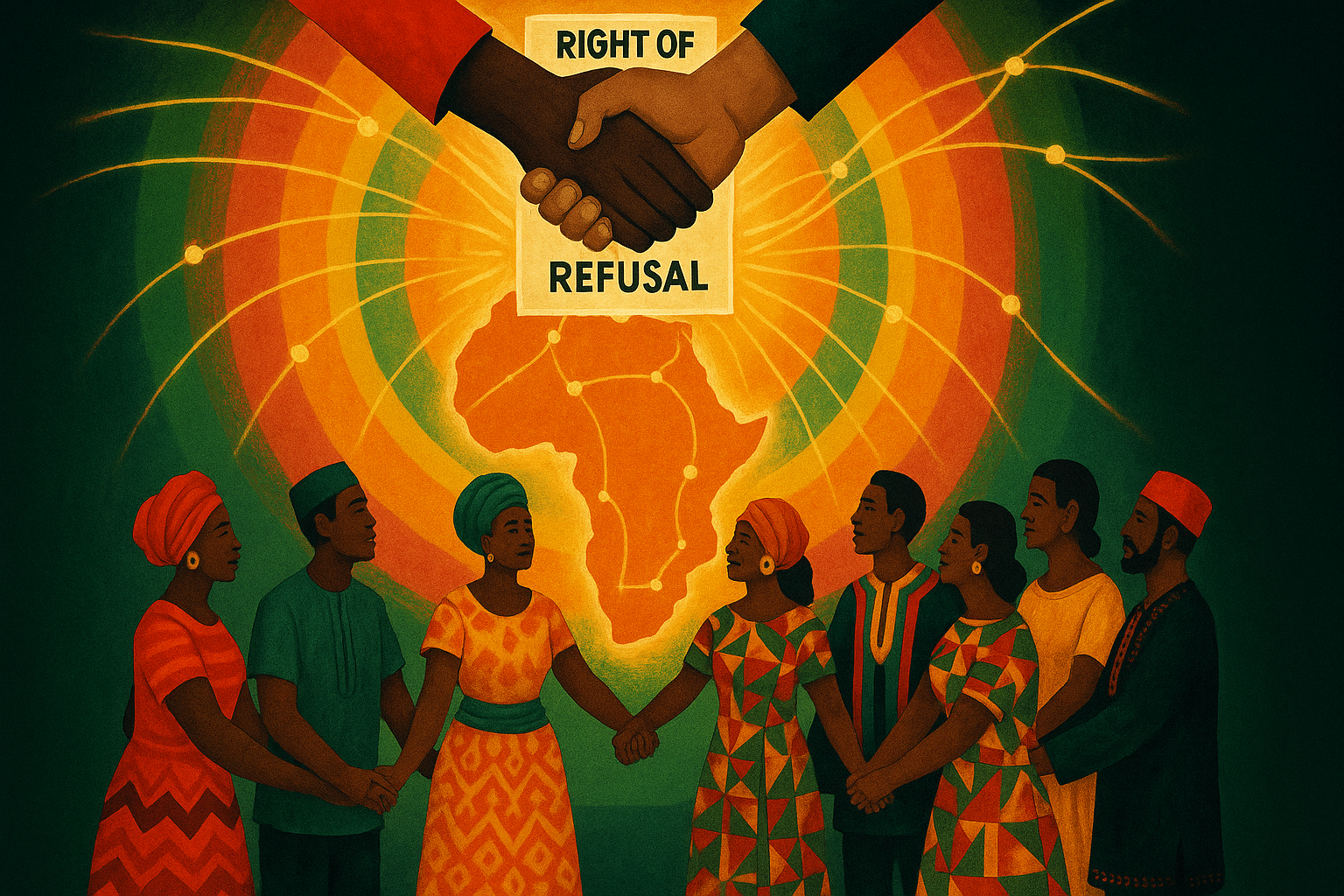
The future of Africa, and indeed the world, demands models that put people before profit, cooperation before exploitation, and justice before convenience. Two powerful ideas — Ujamaa and the Right of First Refusal (RoFR) — offer just such a model when merged together. Ujamaa, born out of African communal traditions and crystallized during Julius Nyerere’s leadership in Tanzania, is the principle of cooperative economics. RoFR, a legal and economic tool, ensures that a community, government, or partner has the first opportunity to accept or reject an offer before it goes to outsiders.
When combined, these frameworks create a dynamic system that strengthens communities, empowers the African diaspora, and lays a foundation for global unity and shared prosperity.
Ujamaa: Spirit of Cooperative Economics
Ujamaa is more than an economic principle; it is a cultural ethos rooted in African traditions of mutual support and shared responsibility. It insists that communities thrive when they build together, share resources, and protect one another from external exploitation. In practice, Ujamaa is seen in village cooperatives, collective farms, credit unions, and mutual aid networks where every member contributes and benefits.
In today’s global economy, Ujamaa represents a call to organize our businesses and investments not as isolated ventures, but as interconnected networks designed to lift entire communities.
RoFR: A Legal Mechanism for Protection
The Right of First Refusal operates differently but complements Ujamaa. It is a legal mechanism that guarantees a party — often a community or government — the right to accept or reject opportunities before outsiders can claim them. Historically, this tool has been misused. For instance, the French employed RoFR clauses in colonial agreements to monopolize African resources and enrich themselves.
But in the hands of Africans and the diaspora, RoFR becomes a weapon of liberation. It ensures that African nations, businesses, and communities are first in line for opportunities to control, distribute, and profit from their own resources.
Merging Spirit and Structure
The merger of Ujamaa and RoFR is a powerful synthesis. Ujamaa provides the spirit of cooperation; RoFR provides the legal structure. Together, they ensure that when opportunities arise — whether contracts, investments, or trade deals — African and diaspora communities are prioritized, and the benefits are shared equitably.
Practical Applications:
- Diaspora Contracts
Governments can require that all development contracts give priority to African and diaspora-led firms. Ujamaa ensures these firms operate cooperatively, spreading benefits widely. - Supply Chain Equity
Products like African coffee and cocoa could be distributed under RoFR laws that give diaspora businesses priority rights. Ujamaa ensures these businesses share profits through cooperatives, not monopolies. - Investment Pools
Diaspora remittances can be pooled into Ujamaa-style cooperative investment funds that automatically invoke RoFR clauses to secure priority access to African development projects. - Education and Workforce Development
Youth training programs can prepare Africa’s next generation for high-value jobs. RoFR ensures they are first in line for hiring in global partnerships, while Ujamaa ensures cooperative ownership of schools and training centers.
Building Global Unity
The Ujamaa + RoFR framework is not just for Africa. Its implications ripple across the world. Indigenous nations in the Americas, Afro-Latinos, Caribbean communities, and other marginalized peoples can adopt this model to ensure their resources and opportunities serve their people first.
By doing so, they can form alliances with African and diaspora communities, creating a global South economic bloc united by cooperation, justice, and mutual advancement.
Opportunity Pathways
- Entrepreneurship: Cooperative businesses can be prioritized for contracts under RoFR legislation.
- Wealth Redistribution: Resources no longer flow outward unchecked; instead, they are reinvested into communities.
- Cultural Diplomacy: Diaspora partnerships rooted in Ujamaa become tools of global solidarity.
- Policy Reform: African governments can model new development paths by enacting RoFR laws guided by Ujamaa values.
The Vision Ahead
If Africa and its diaspora fully embrace Ujamaa and RoFR together, the future could look radically different. Instead of watching foreign corporations reap most of the profits from African land, labor, and talent, Africans would be in control. Instead of the diaspora being scattered and disconnected, they would be unified in cooperative networks, investing in Africa’s rise and securing their rightful place in global economics.
This is not just an African project. It is a human project. The merger of Ujamaa and RoFR demonstrates how ancient traditions and modern legal tools can align to create fairness, unity, and shared prosperity across the globe.
Call to Action
The time to act is now. As readers, entrepreneurs, policymakers, and everyday citizens, we can demand that Ujamaa and RoFR principles guide our contracts, our purchases, and our investments. We can choose to support cooperative businesses. We can demand governments and corporations honor RoFR priorities for Africans and the diaspora.
Together, we can turn Ujamaa’s spirit and RoFR’s structure into a global movement for justice and opportunity.
Support Our Work
This article is published through Greater Diversity News as part of The Economic Liberation of Africa initiative. Help us continue this mission. Donate today and subscribe to GDN to stay informed and engaged in building a future of global unity through Ujamaa and RoFR.



No Comments so far
Jump into a conversationNo Comments Yet!
You can be the one to start a conversation.Only registered users can comment.