
Esther’s Plea for Africa’s Children
In a powerful and moving appeal, Esther Mambu, a young leader from Sierra Leone,
has set out to inspire and mobilize Black students and Pan-Africans across the United
States and around the world. Her message is simple yet profound: together, we can
create a future where every African child has access to quality education, safe
classrooms, and opportunities to learn and thrive. Esther’s voice carries the weight of
countless young Africans whose dreams are stifled by overcrowded schools, scarce
resources, and the constant struggle for a quality education.
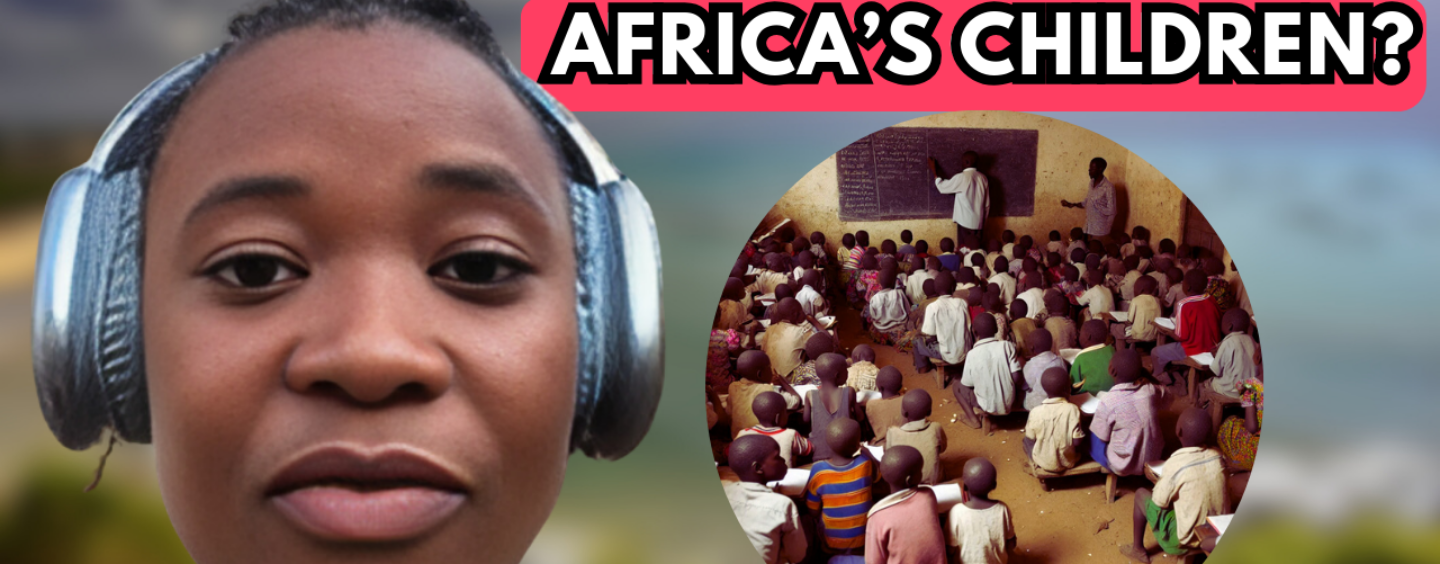
Esther’s journey began in her village, Waterloo, Sierra Leone, where an overburdened
school serves hundreds of children with minimal resources. “In our community, we have
one small, crowded school for all the children. It’s not enough,” Esther shares. “There
aren’t enough classrooms, not enough teachers, and sometimes we don’t even have
books.” For many children in her village, learning takes place outside, on dusty grounds,
because the classrooms are too full to hold everyone. Despite these challenges, Esther
remains steadfast, drawing strength from her dream of a better Africa. Her message is
clear: Africa’s youth are ready to build a brighter future, and they are reaching out to
Black students and Pan-Africanist worldwide to join them in this mission.
Esther’s story is not an isolated one; her challenges are shared by millions of young
people across the continent. In her appeal, she speaks directly to corporations and
leaders who benefit from Africa’s abundant resources, calling on them to give back in a
meaningful, lasting way. But more than that, she calls on Black students in the diaspora
– her “brothers and sisters” – to stand beside her in this fight. “Our brothers and sisters
studying in America, Europe, and everywhere,” she says, “your education, your voice,
and your support mean so much to us.”
This heartfelt call to action resonates deeply with the idea of Pan-Africanism, which
emphasizes unity and mutual support among African and Black communities worldwide.
For Esther, the diaspora represents a powerful network of individuals who understand
the challenges faced by African youth and are uniquely positioned to make a difference.
Her words remind us of the deep connections shared between Africans on the continent
and those in the diaspora – connections that transcend borders, cultures, and
generations.
“Black students around the world have access to resources and networks that can bring
about real change,” Esther explains. “You can amplify our voices, advocate for our
needs, and tell our stories. You have the power to organize, raise awareness, and even
fund initiatives that could transform our lives. We need your support to create a future
where education is a right, not a privilege.”
One of the most powerful aspects of Esther’s message is her insistence that Africa’s
youth are not looking for charity but partnership. She envisions a future where
corporations operating in Africa recognize their responsibility to invest in the
communities they profit from and where the diaspora actively supports the development
of sustainable, long-term solutions. “We don’t want charity,” Esther states firmly. “We
want partnership. We are Africa’s future. If you are benefiting from our resources and
our land, then please help us build a future.” This appeal speaks to the heart of a larger
issue: the need for corporate responsibility in Africa. For decades, corporations have
extracted wealth from the continent without making adequate investments in the
communities they impact. Esther’s call for corporate accountability is a rallying cry for
ethical business practices that prioritize human development and sustainable growth.
Esther’s message to Black students and Pan-Africanist around the world is more than a
call for solidarity; it’s a roadmap for action. She outlines several keyways supporters can
contribute to the movement for educational equality in Africa:
1. Raise Awareness – By sharing stories like Esther’s and discussing the
educational challenges in Africa, students can shed light on issues that are often
overlooked by mainstream media. Esther encourages supporters to use their
voices, platforms, and networks to amplify the struggles and dreams of African
youth.
2. Advocate in Your Communities – Advocacy doesn’t require significant
resources, just a commitment to speak out. Esther urges supporters to bring up
these issues in their schools, among their friends, and within their communities.
By doing so, they can build a broader base of support for educational initiatives in
Africa.
3. Organize and Mobilize – Black student organizations and clubs can play a
significant role in organizing fundraising events or campaigns focused on
supporting African schools. These funds can go toward purchasing educational
supplies, supporting teacher training programs, or even constructing new
classrooms in communities like Esther’s.
4. Engage with Corporations – Supporters can directly reach out to corporations,
particularly those that have interests in Africa, to ask for greater accountability
and investment in education. By writing letters, initiating petitions, or tagging
companies on social media, they can press for real change.
The Power of Collective Action
Esther’s appeal is more than a plea for help; it’s a call for unity, a reminder that when
the African diaspora comes together, it can accomplish extraordinary things. Her story
reminds us that we are all part of a larger family with shared hopes, dreams, and
struggles. As, the host of the Economic Liberation of Africa platform, I remind all Pan-
Africanist, “This is not just about what corporations can do; it’s about what we can do as
a united people.”
By answering Esther’s call, Black students worldwide have an opportunity to be part of
something transformative. “Together,” she says, “we can create a ripple effect that
changes lives, builds new schools, and opens doors to education for every young
African who deserves it.” In Esther’s eyes, this collective effort isn’t just about the future
of African children – it’s about building a legacy of solidarity and empowerment for
generations to come.
Esther’s message is a reminder of the profound impact that global unity can have on
local communities. As she looks toward a future where every African child has access to
quality education, she calls on Black students and Pan-Africanist worldwide to join her
in this mission. “If you can lend us your support, whether by raising awareness,
organizing, funding, or simply sharing our stories, you can be part of our community,
and together, we can create the change we all need.”
Esther’s vision is one of hope, resilience, and empowerment. Her words echo the spirit
of countless young Africans who are ready to rise but need the world to stand beside
them. In answering her call, supporters around the world have the chance to build
something truly extraordinary: a future where every African child can learn, grow, and
reach their full potential.



No Comments so far
Jump into a conversationNo Comments Yet!
You can be the one to start a conversation.Only registered users can comment.