
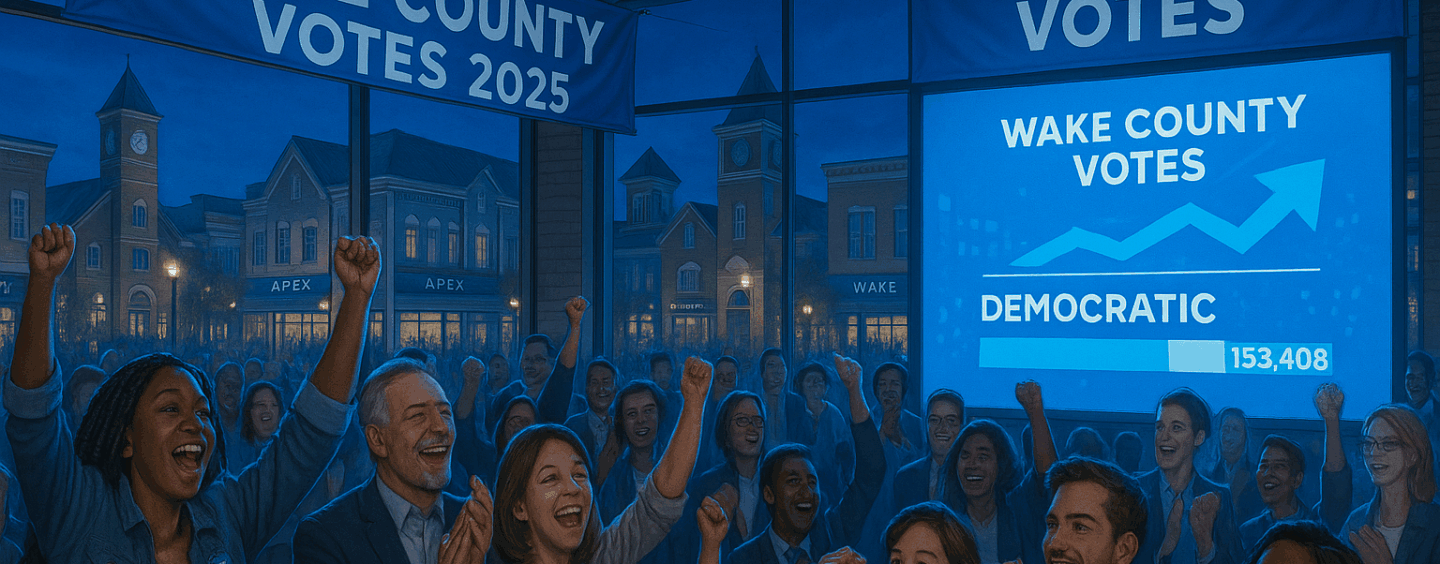
Wake County’s 2025 Election Results Signal a Political Realignment in North Carolina’s Fastest-Growing Region
By Peter Grear, with AI assistance
Published: November 14, 2025
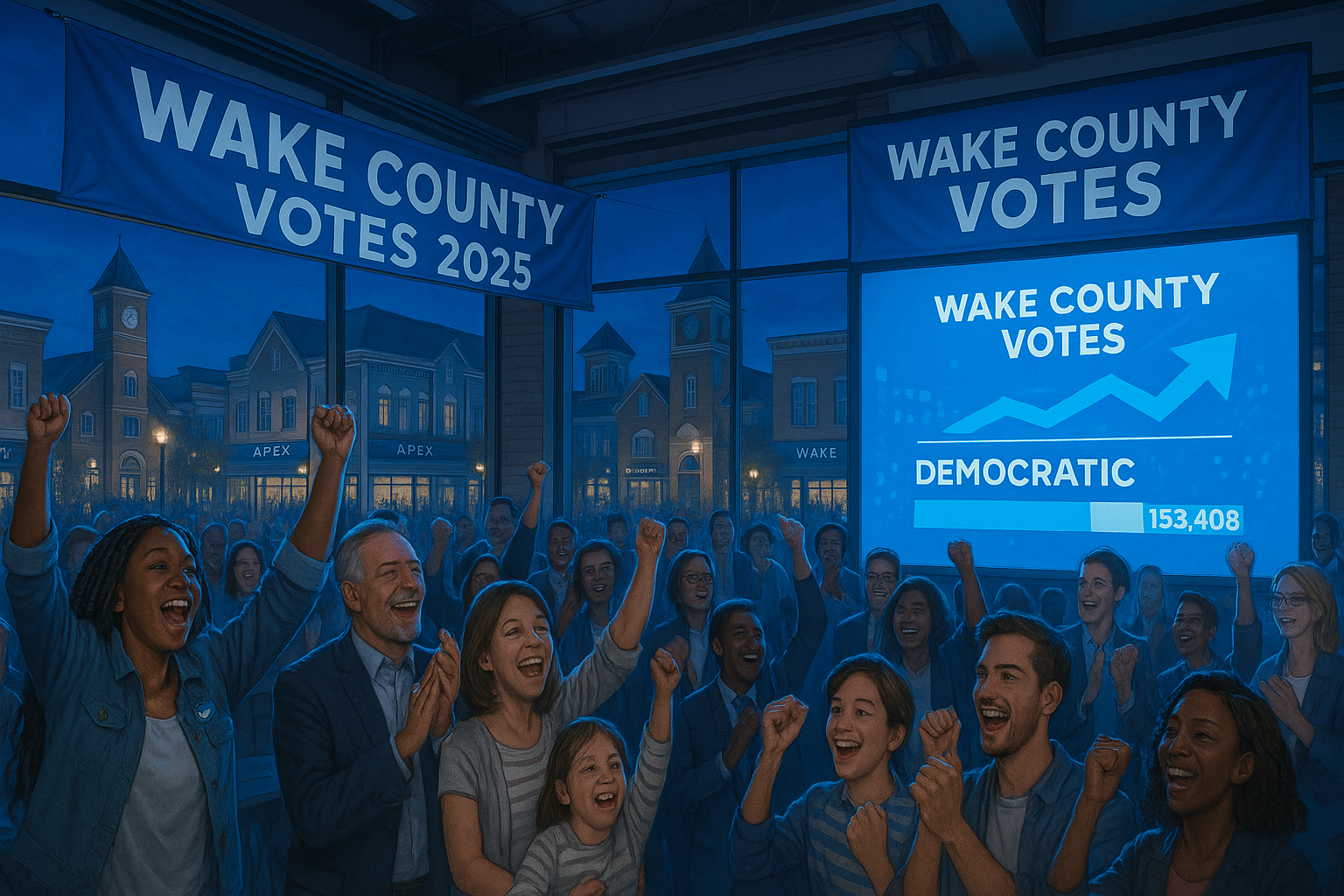
In one of North Carolina’s most closely watched counties, Democrats delivered a commanding performance in the November 2025 municipal elections—sweeping a majority of city and town races and underscoring a profound political shift taking shape across the state’s suburban heartland. Once known for its competitive balance between the two major parties, Wake County’s latest results reveal a growing Democratic dominance and a warning for Republicans who have steadily lost their grip on North Carolina’s fastest-growing region.
A Blue Wave in Suburban Town Halls
According to official tallies from the Wake County Board of Elections and local media outlets, Democrats won 25 of the 27 races in which they fielded or endorsed candidates—an overwhelming victory even by Wake County’s recent standards. Republicans, by contrast, managed to win just one of the 22 races where their party had made formal endorsements.
In Cary, Apex, Holly Springs, and Wake Forest—towns that have historically swung between parties—Democrats flipped key offices, including several mayoral and council seats. These results not only confirm Wake County’s steady march toward Democratic dominance but also suggest that local voters increasingly align with candidates focused on inclusive growth, infrastructure investment, and education.
The Highlights: Democrats Sweep the Map
In Wake Forest, Democrat Ben Clapsaddle scored a surprise victory over a long-time Republican incumbent mayor, signaling that the northern suburbs are no longer safe territory for the GOP.
In Fuquay-Varina, Democrat Bill Harris unseated the sitting Republican mayor, marking one of the most symbolic victories of the election. Fuquay-Varina, once considered a conservative enclave, has experienced rapid population growth and demographic diversification, bringing new voters who lean Democratic on issues such as public transit, affordable housing, and community development.
Cary, a city often cited as a bellwether for North Carolina’s suburban politics, also turned decisively blue. All three city council seats up for election went to candidates endorsed by the Democratic Party. Cary’s shift reflects a broader pattern seen across fast-growing municipalities in the Research Triangle—where young professionals, university graduates, and transplants from other regions have transformed the political landscape.
Even in Holly Springs and Apex, where elections were officially nonpartisan, Democratic-endorsed candidates prevailed. Turnout in these towns far exceeded expectations for a municipal election year, suggesting that Wake County residents are increasingly motivated by national-level issues that echo at the local level—such as education funding, climate resilience, and reproductive rights.
Republican Retreat: A Warning Sign for 2026
The Wake County Republican Party entered the 2025 municipal cycle with hopes of regaining ground lost over the past decade. Instead, it suffered one of its worst local performances in years. Only a single Republican-endorsed candidate managed to win their race—underscoring both organizational weaknesses and a growing disconnect with the county’s changing electorate.
Political analysts note that Wake County’s transformation mirrors broader suburban trends nationwide: as metropolitan regions diversify, prioritize sustainability, and attract knowledge-economy workers, traditional Republican appeals centered on tax cuts and conservative social values lose traction.
Republicans in Wake County now face an urgent strategic dilemma. Without a recalibrated message that resonates with suburban families and younger voters, the party risks further isolation even in surrounding counties like Johnston and Harnett, which have historically served as its base of support.
Why These Local Races Matter
Although municipal elections do not directly determine state or federal power, they are essential in shaping political infrastructure. Local officials control zoning, housing development, transit projects, and school partnerships—all key issues influencing quality of life in one of America’s fastest-growing regions.
By sweeping these races, Democrats not only consolidated their policy influence but also strengthened their future electoral bench. City council members and mayors often become candidates for higher offices, meaning Wake County’s 2025 class of local leaders could play a pivotal role in the 2026 midterms and beyond.
Moreover, these local wins help the party refine its message around practical governance. Voters responded positively to candidates who emphasized affordable housing, public safety, and transportation innovation—issues grounded in daily realities rather than partisan culture wars.
The Broader Implications for North Carolina
Wake County’s 2025 results fit into a larger pattern across North Carolina’s urban and suburban centers. From Charlotte’s Democratic sweep to Wilmington’s mayoral and council wins, cities and their surrounding suburbs have increasingly rejected Republican candidates. The same trends are visible in the state’s “Research Triangle” corridor, where Raleigh, Durham, and Chapel Hill already serve as Democratic strongholds.
If this momentum continues, Democrats could enter the 2026 midterm elections with unprecedented local organization and voter enthusiasm. For Republicans, the challenge is steep: they must rebuild credibility on policy issues such as housing affordability, environmental stewardship, and education equity—areas where Democratic candidates have effectively aligned their local messaging with voter priorities.
Looking Ahead
Wake County’s 2025 elections are more than a local footnote; they represent a turning point in North Carolina’s political evolution. The results demonstrate that demographic change, economic diversification, and civic engagement are reshaping the balance of power at every level of government.
As Democrats celebrate their victories and Republicans regroup, one truth stands out: Wake County has become both a symbol and a testing ground for the future of Southern politics. The question now is not whether Democrats can win in the Triangle—it’s whether Republicans can adapt fast enough to remain relevant.
Donate to GDN – Greater Diversity News | Subscribe – Greater Diversity News
Join the conversation—leave your take or a question.
Help grow The Economic Liberation of Africa conversation—forward to someone curious about Africa-centered opportunity.



No Comments so far
Jump into a conversationNo Comments Yet!
You can be the one to start a conversation.Only registered users can comment.