
Walmart’s Collapse: A Warning to Corporations Rolling Back DEI
By Peter Grear with AI Assistance — September 25, 2025
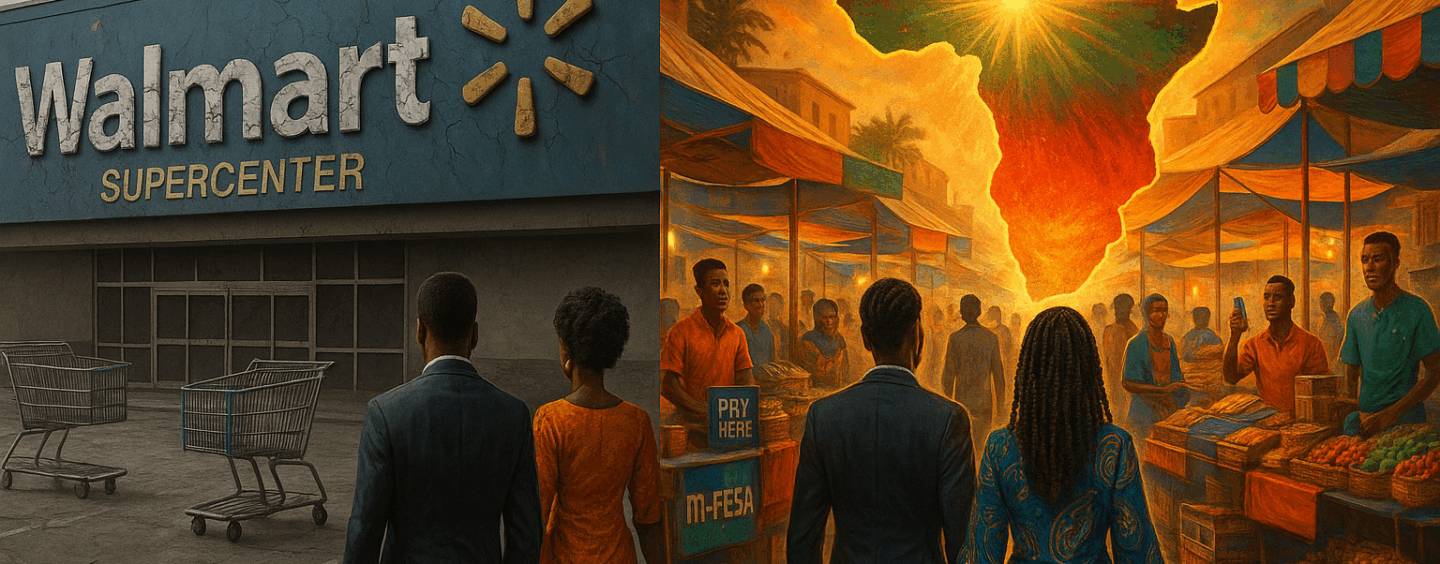
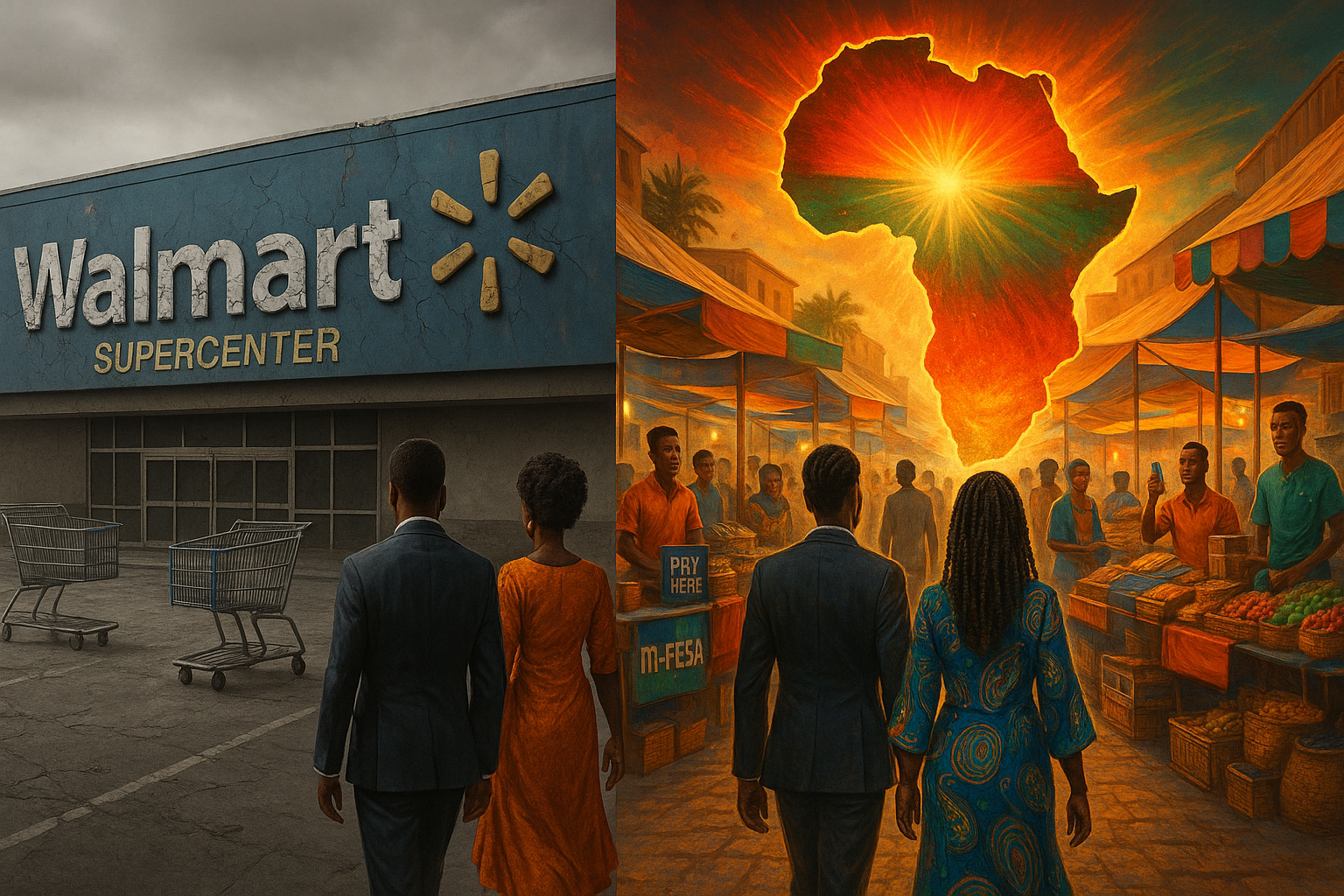
The headline is striking: “Walmart COLLAPSES: Africa’s Marketplace Overtakes America’s Consumer Empire.” Whether or not Walmart has truly collapsed, the symbolism is powerful. A retail giant that once defined global consumer dominance is now being contrasted with Africa’s rising markets. For Pan-Africans, this is more than a story about shopping. It is a signal—a warning that corporations dismantling Diversity, Equity, and Inclusion (DEI) programs are courting irrelevance in the global economy of the future.
Walmart as a Cautionary Tale
Walmart’s rollback of DEI is well-documented. The company withdrew from supplier diversity programs, racial equity centers, and commitments that once tied its success to community empowerment. This retreat was not unique—other corporations, from Meta to Deloitte, have similarly backpedaled under political pressure or cost-cutting measures. But Walmart’s symbolic “collapse” in global narrative marks a turning point.
The suggestion that Africa’s marketplace is overtaking America’s consumer empire speaks volumes: when corporations abandon equity, they not only harm their workers and communities—they also risk losing their competitive edge in the very markets that will define the future.
The Ripple Effect of DEI Rollbacks
When Walmart pulls back from equity commitments, it sends shockwaves through supply chains, hiring pipelines, and consumer trust. Now imagine this multiplied across dozens of corporations retreating from DEI:
- Consumer Backlash: Shoppers—especially younger generations—demand values-driven businesses. When corporations are seen as betraying fairness, customers take their loyalty elsewhere.
- Talent Drain: Abandoning DEI undermines leadership pipelines for underrepresented groups, including the African diaspora, cutting corporations off from some of the world’s most dynamic talent.
- Legal & Reputational Risk: Rollbacks may re-expose companies to discrimination lawsuits and reputational damage that cannot be easily contained.
- Global Competition: In a multipolar world, inclusive African enterprises can leapfrog Western firms, positioning themselves as consumer-friendly and justice-driven.
Walmart’s symbolic “fall” illustrates what happens when corporate strategy ignores these realities.
Africa’s Rising Marketplace
The other half of the story is Africa’s rise. With its population projected to double by 2050, its youth bulge, and its accelerating digital adoption, Africa is becoming the world’s fastest-growing consumer base. Far from being an afterthought, Africa is now positioned as the marketplace of the future.
The video’s framing—Africa overtaking America—captures a truth many corporations resist: the era of one-sided Western consumer empires is ending. Companies that fail to embrace equity and inclusion risk being left behind as Africa shapes the global future.
Diaspora Links: Why Pan-Africans Should Pay Attention
For the African diaspora, DEI rollbacks strike close to home. Many diaspora professionals advanced through opportunities created by DEI frameworks—mentorship programs, diverse hiring goals, inclusive leadership training. As these protections disappear, doors begin to close.
This creates a new urgency. Diaspora talent must not wait for Western corporations to rediscover equity. Instead, they can channel skills, capital, and networks back to Africa—where markets are growing, and where Pan-African frameworks of justice, like the Right of First Refusal (RoFR), can set new global standards.
Political and Economic Stakes
The DEI rollback is not only a corporate trend; it is political. In the U.S., executive orders and conservative backlash have emboldened corporations to abandon fairness in the name of “meritocracy.” But in truth, dismantling DEI entrenches inequality and undermines competitiveness.
For Africa, this is an opening. Governments and business associations can craft their own equity requirements, link them to trade and procurement, and enforce inclusion in ways that multinationals cannot ignore. Instead of waiting for the West, Africa can lead.
Lessons from Walmart’s “Collapse”
The omen is clear:
- Corporations that abandon equity risk losing trust, talent, and relevance.
- Consumers—especially young, global Africans—are watching, and they are not loyal to exclusionary brands.
- Africa’s rise means that the future belongs to those who embrace justice, fairness, and community, not those who dismantle them.
If Walmart’s symbolic fall foreshadows the fate of other corporations rolling back DEI, then Africa and the diaspora must seize this moment—not to lament, but to lead.
A Call to Pan-African Action
Walmart’s “collapse” is not just about retail. It is a story of what happens when corporations misread history’s direction. The 21st century belongs to inclusive economies, not exclusionary empires. Pan-Africans everywhere must recognize this truth and act: by investing in African markets, supporting businesses that honor equity, and demanding that corporations operating on our soil meet standards of fairness that cannot be rolled back.
Africa’s marketplace is rising. The only question is: will we allow Western corporations to drag us backward—or will we build forward, on our own terms?
Call to Action
This article is published by Greater Diversity News (GDN), with AI assistance, as part of our ongoing project: The Economic Liberation of Africa. We call on Pan-Africans across the continent and in the diaspora to unite, organize, and invest in Africa’s future. Support GDN and join us in advancing the Right of First Refusal (RoFR) and building a global Pan-African economic development movement.



No Comments so far
Jump into a conversationNo Comments Yet!
You can be the one to start a conversation.Only registered users can comment.