
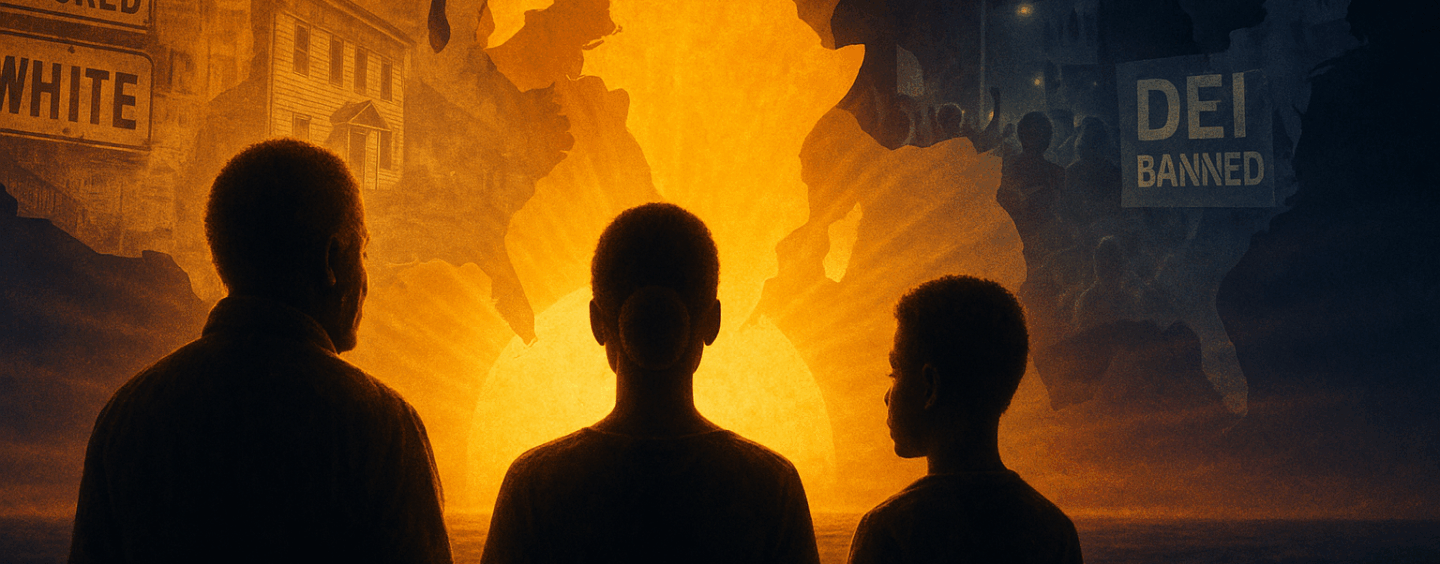
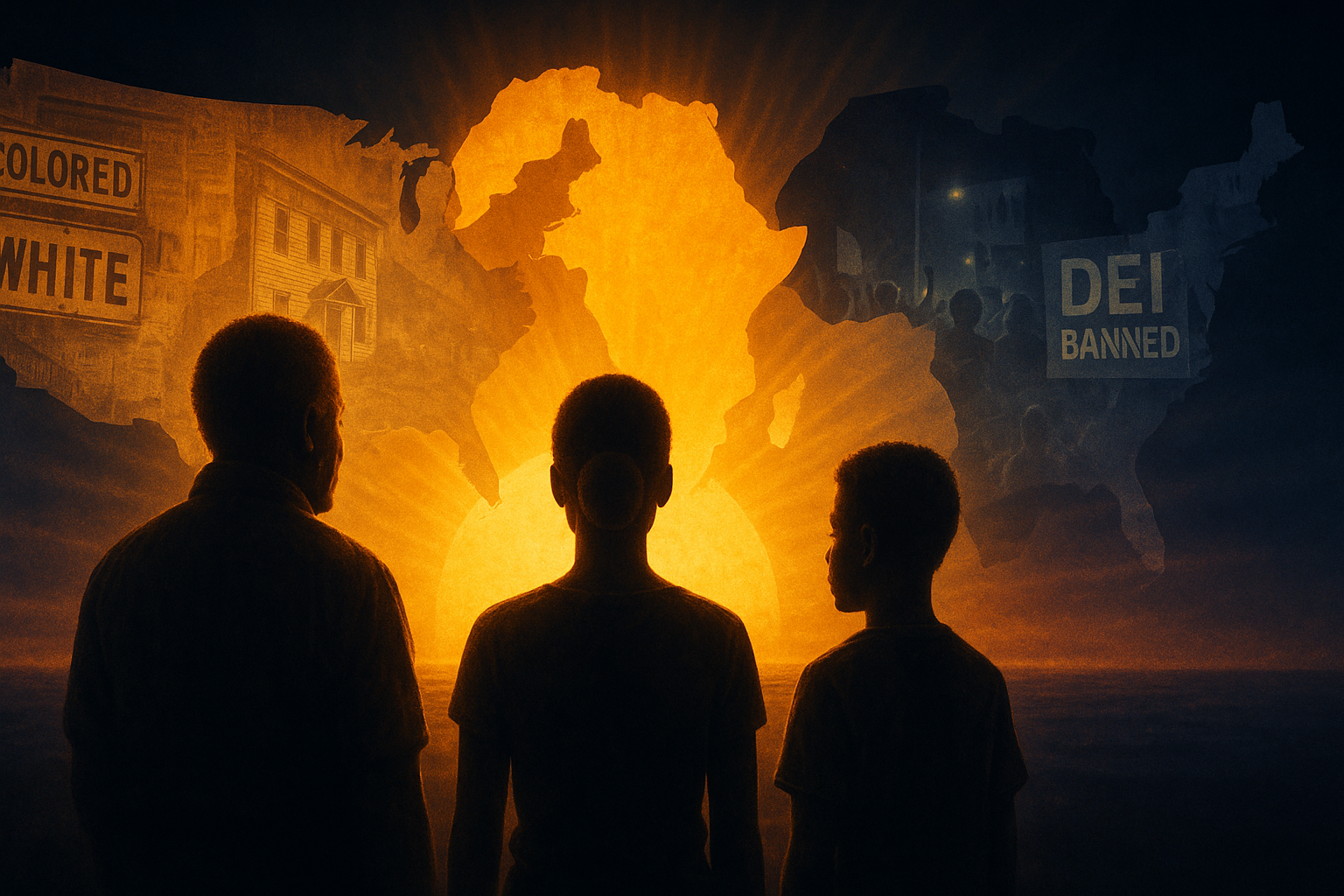
When DEI Is Under Attack: How White Supremacist Policies Are Teaching Black Youth the Lessons Their Grandparents Learned From Jim Crow
By Peter Grear, with AI assistance
Published December 2, 2025
The coordinated rollback of Diversity, Equity & Inclusion (DEI) across America is doing far more than reversing decades of racial progress. It is becoming a political classroom—one that is re-teaching Black youth the same lessons their grandparents learned under segregation and Jim Crow. The tactics are modern. The rhetoric is coded. But the purpose is familiar: to preserve racial hierarchy by restricting access, rewriting history, and disciplining Black upward mobility.
As DEI programs are stripped from universities, corporations, government agencies, school curricula, and public institutions, Black youth are witnessing a hard but vital truth: progress in America is never permanent. Their grandparents learned this lesson through literacy tests, closed schools, redlining, and lynching. Today’s generation is learning it through political bans, book removals, hiring reversals, and the normalization of white-nationalist ideology in public life. Rights can be granted—and taken away just as quickly.
What many believed was stable progress after the civil-rights era is revealing itself to be conditional. When Black advancement threatens the balance of power, the system recalibrates. DEI’s dismantling shows young people that institutions will protect white advantage first, even when doing so undermines fairness, democracy, and economic opportunity. The country that once promised inclusion is now signaling that equity is optional.
Black youth are also seeing the resurgence of organized white resistance—a pattern their grandparents knew intimately. During Jim Crow, white citizens’ councils, segregationist lawmakers, and local power brokers fought integration with relentless intensity. Today, a well-funded machine—comprised of anti-DEI legal groups, MAGA policymakers, billionaire donors, and online extremist networks—is replicating the infrastructure of resistance. DEI officers being fired, Black studies programs isolated, and civil-rights staff removed are not coincidences. They are coordinated strategies.
Perhaps the most striking parallel is the renewed battle over education. Under segregation, Black students were denied quality schooling and access to full historical truth. Today, states ban African American history courses, censor books, and discipline teachers for telling the story of racism. Black youth are learning that knowledge itself is a battleground—and that America polices information when it empowers them.
Yet even in this climate, a remarkable shift is happening. The backlash against DEI is heightening Black political literacy. Young people are learning to read structural racism in real time. They see dog whistles disguised as “colorblindness,” hiring discrimination framed as “meritocracy,” and book bans justified through “parental rights.” They understand that white supremacy evolves, even when the laws change.
But this moment is also producing something powerful: a revival of Black self-determination. Just as their grandparents built parallel institutions during segregation—Black businesses, Black colleges, Black civic networks—today’s youth are rebuilding their own systems of support. Black student organizations are expanding. Black chambers of commerce are rising. Diaspora-focused economic movements, especially the African Union’s Sixth Region initiative, are inspiring a global awareness of shared destiny.
The DEI rollback is ironically strengthening the very identities it seeks to suppress. It is sharpening focus on the importance of collective economic empowerment and reminding Black youth that the struggle for freedom is ongoing. They are realizing, as earlier generations did, that liberation must be fought for, protected, and renewed in every era.
As America walks backward, Black youth are moving forward with greater clarity. They are seeing the old structures in their new forms. They recognize the patterns. They hear the echoes of the past beneath the rhetoric of the present. And they are being prepared—not discouraged—by the resistance they face.
History may repeat, but so does Black resilience. This generation is learning not only what their grandparents endured, but also what made them unstoppable.
Join the conversation—leave your take or a question.
Help grow The Economic Liberation of Africa conversation—forward to someone curious about Africa-centered opportunity.
Donate to GDN – Greater Diversity News | Subscribe – Greater Diversity News



No Comments so far
Jump into a conversationNo Comments Yet!
You can be the one to start a conversation.Only registered users can comment.