
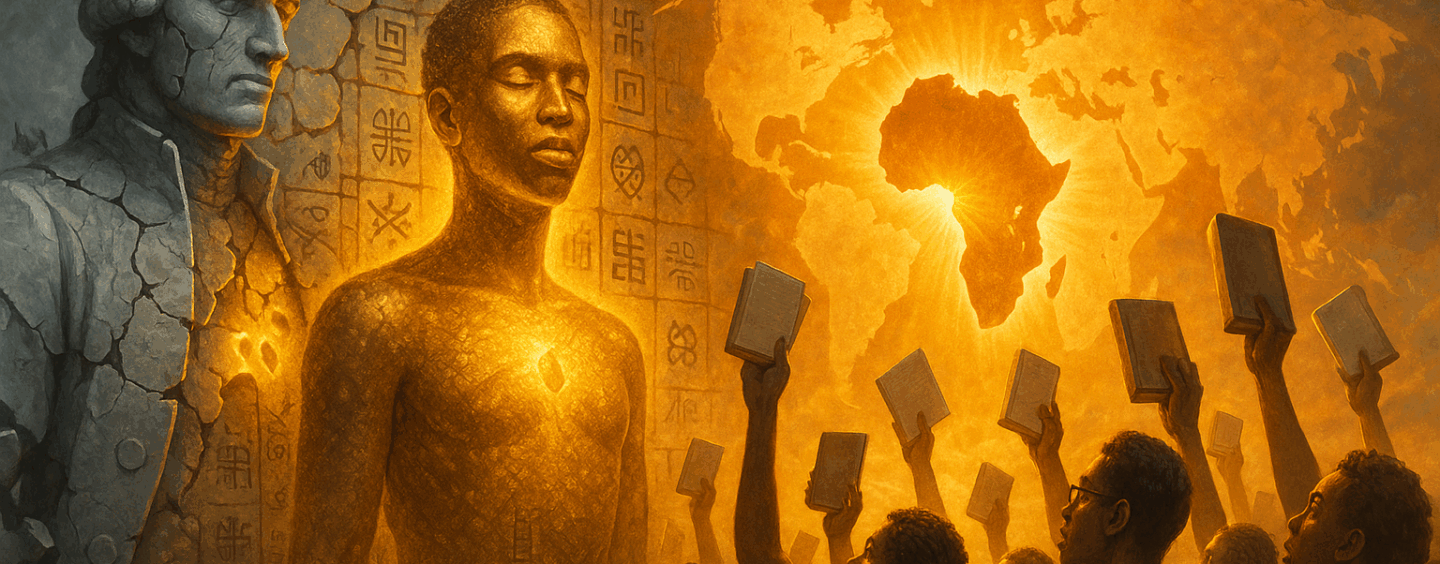
When White Supremacy Meets the Global Truth of Black History
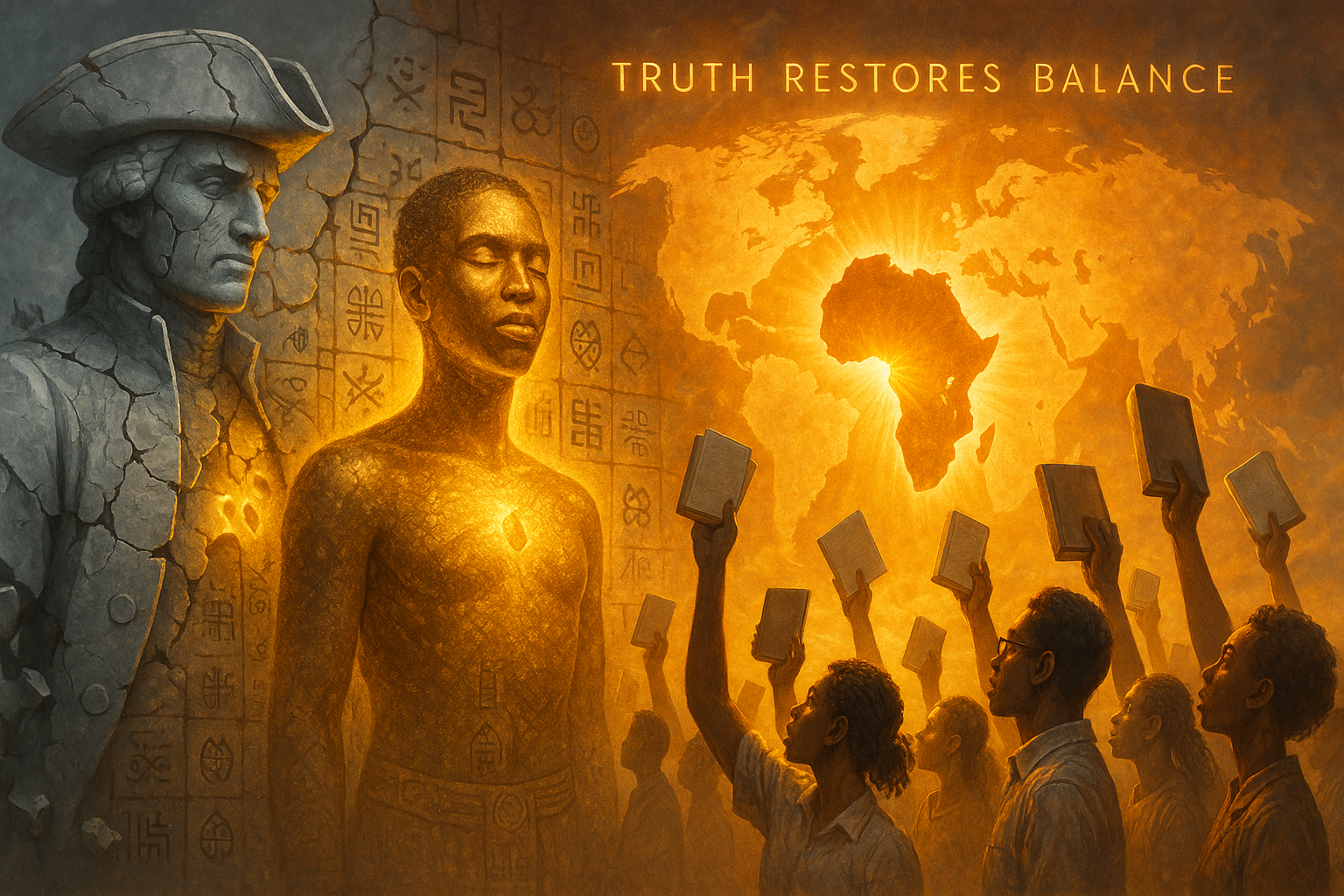
By Peter Grear, with AI assistance
November 3, 2025
When the world finally confronts the unfiltered truth of Black history, white supremacy—the system built on the illusion of racial hierarchy—will face its greatest reckoning. For centuries, power and privilege were justified through a false narrative: that Europe civilized the world, that Africa contributed little, and that whiteness defined progress. But as global education, technology, and consciousness converge to reveal the real record of civilization, that illusion will crumble. What follows will not be chaos—it will be correction.
- The Great Unveiling
White supremacy has always depended on control of the story. It rewrote textbooks, rebranded theft as discovery, and portrayed enslavement as salvation. Yet every new archaeological find, genetic study, and cultural rediscovery points back to a single origin: Africa as the cradle of humanity, civilization, and knowledge.
When this truth becomes global consensus—when schoolchildren in Tokyo, Lagos, and Chicago all learn that the world’s first universities, astronomers, and philosophers were African—the psychological foundation of racial superiority dissolves. Humanity begins to see that the very people once enslaved built the intellectual scaffolding of civilization itself.
The result will be a moral and educational realignment. Africa will no longer be “emerging.” It will be acknowledged as foundational—and that recognition will shift everything from global trade to cultural respect.
- The Economic Rebalance
White supremacy was not just a social system—it was an economic one. Its wealth came from extraction: of African labor, land, and genius. When the truth of Black history becomes mainstream, global consciousness will demand economic reconciliation, not as charity but as justice.
We will see calls for reparative economics:
- Transparent supply chains that trace resources to African origin.
- Corporate accountability for historical profiteering.
- Diaspora investment guided by the Right of First Refusal (RoFR) principle—ensuring African people are first in line to benefit from African wealth.
- Partnerships replacing exploitation, built on mutual benefit and ownership.
This shift will not drain global economies—it will stabilize them, creating balance after centuries of imbalance. A system built on inclusion is ultimately more sustainable than one built on theft.
- The Cultural Renaissance
As the world embraces the truth of Black history, the arts and media will undergo a rebirth. For centuries, colonial culture defined “universal beauty” and “high art” through European standards while labeling African expression as primitive. That false hierarchy collapses once the truth emerges: that rhythm, architecture, science, and spirituality all trace their earliest sophistication to African civilizations.
A global cultural renaissance will follow—films, music, fashion, and literature reflecting Africa not as a backdrop but as the blueprint. The philosophies of Ma’at (truth and balance), Ujamaa (cooperative economics), and Sankofa (retrieving what was lost) will guide global consciousness.
This renaissance won’t just elevate Black culture; it will heal global culture, grounding creativity in authenticity rather than appropriation.
- The Political Realignment
When white supremacy loses its moral authority, geopolitics must adjust. No longer will Africa sit at the table as a dependent; it will rise as a decisive voice in world affairs.
The African Union, now representing 1.4 billion people, will command new respect as nations seek fair partnerships in trade, climate policy, and technology. Global South alliances—linking Africa, Asia, and Latin America—will redefine what power looks like.
Western democracies, forced to confront their own racial contradictions, will begin to understand that democracy cannot coexist with structural exclusion. The new political era will be defined not by domination, but by distributed power—where leadership means partnership, not control.
- The Spiritual and Psychological Shift
The most profound transformation will be internal. When the truth of Black history is universally acknowledged, humanity’s collective self-image changes. The oppressed rediscover pride, and the privileged rediscover humility.
Black identity—long distorted through slavery, colonialism, and miseducation—will reconnect with its original meaning: humanity’s first light. The recognition that we all descend from Africa will dissolve the artificial barriers that have separated humanity for 400 years.
Religion, too, will shift. The same scriptures once used to justify bondage will be reinterpreted through African-origin wisdom, restoring spirituality as a source of unity, not hierarchy.
- Technology as Truth’s Messenger
AI, blockchain, and open digital archives will play a pivotal role in dismantling lies. For centuries, colonial powers controlled physical archives and publishing houses. Today, truth can be decentralized.
African scholars, historians, and technologists are already digitizing manuscripts from Timbuktu, Ethiopian chronicles, and oral traditions that predate European empires. Once this data enters global networks, historical bias collapses. Algorithms trained on full truth will rewrite how the world learns.
The same tools once used to spread propaganda will spread proof.
- The World After the Collision
When white supremacy finally meets the global truth of Black history, the outcome won’t be vengeance—it will be rebalancing. Humanity will mature.
The myth of racial superiority will fade. Economic systems will shift toward fairness. Education will tell a complete story. Culture will celebrate shared roots rather than stolen symbols. And Africa—the world’s first home—will stand not as victim or vassal, but as visionary.
This collision will mark the end of an illusion and the dawn of a new age: one where truth, not whiteness, defines worth; where inclusion, not exclusion, defines progress; and where the world finally acknowledges that the light of civilization has always been African.
Join the conversation—leave your take or a question.
Help grow The Economic Liberation of Africa conversation—forward to someone curious about Africa-centered opportunity.
Support this mission. Donate or subscribe today at GreaterDiversity.com.



No Comments so far
Jump into a conversationNo Comments Yet!
You can be the one to start a conversation.Only registered users can comment.