
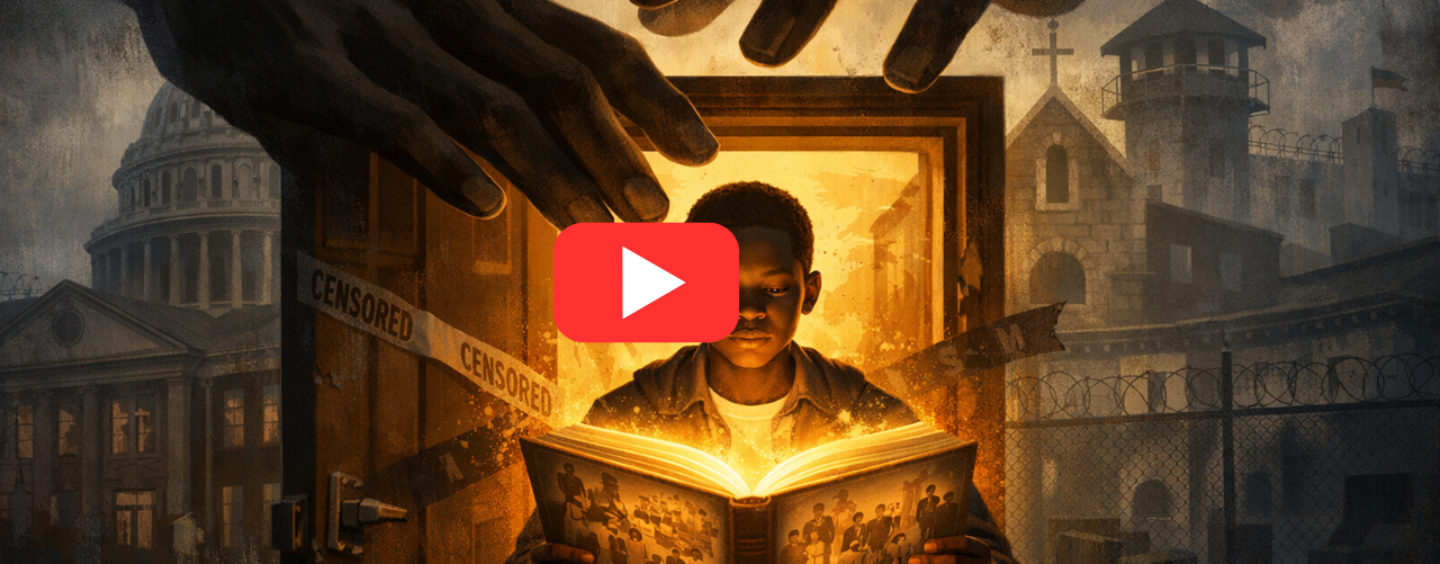
Why Teaching Black History Challenges The Christian Nationalism Worldview
https://www.youtube.com/watch?v=wL7FoJARr9k&t=58s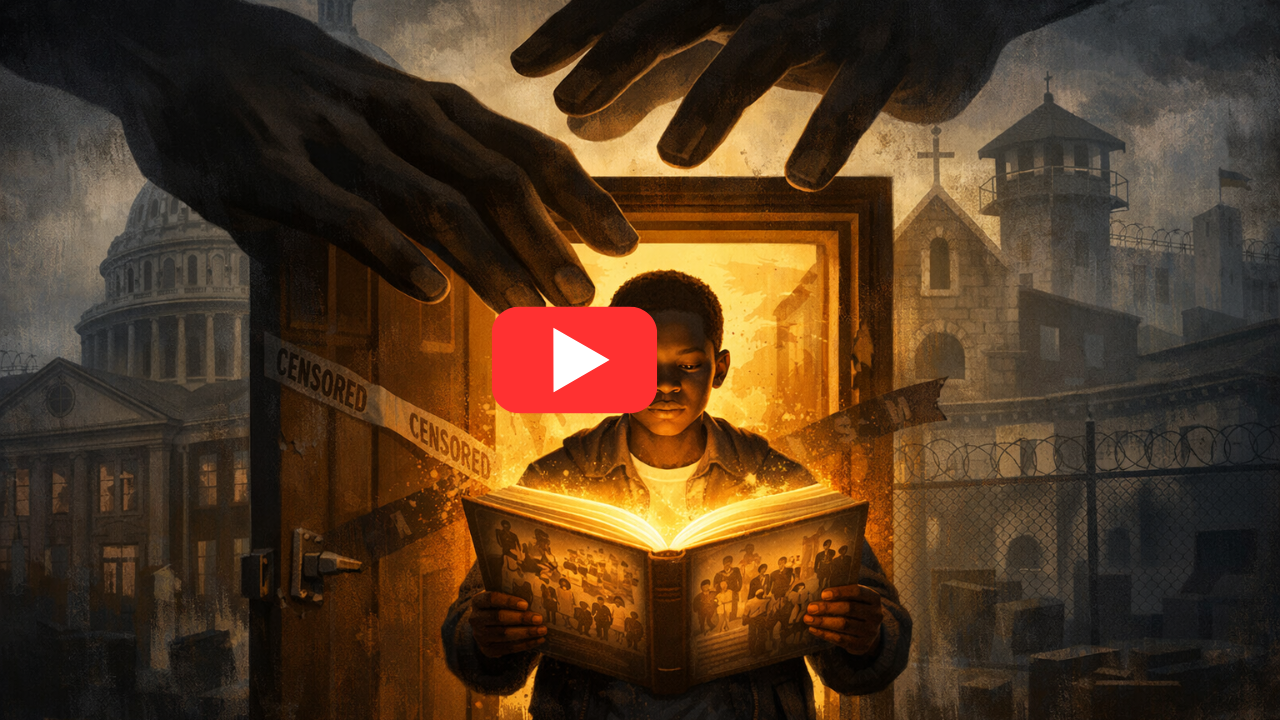
By Peter Grear with AI Assistance
December 29, 2025
The escalating war on Black education in the United States is often framed as a dispute over curriculum, parental rights, or political ideology. In reality, it is something far more deliberate and far more dangerous: a strategic assault on historical truth designed to preserve racial and gender hierarchy. At the center of this conflict lies a simple but destabilizing fact—teaching Black history fundamentally challenges the worldview of Christian Nationalism and New Jim Crow politics.
Black history does not merely add context to the American story. It rewrites it. And for movements that rely on myths of white moral innocence, divinely ordained authority, and patriarchal leadership, that truth is intolerable.
Christian Nationalism depends on a carefully constructed narrative: that America was founded as a righteous Christian nation, led by virtuous men whose authority flowed naturally from God. Black history shatters this mythology by documenting how slavery, dispossession, segregation, and racial violence were not deviations from American ideals, but central pillars of state-building. Teaching this history exposes power not as sacred inheritance, but as something seized, defended, and enforced through law and violence.
That revelation alone destabilizes claims of divine entitlement.
Historically, Black education has always been perceived as a threat by those invested in racial hierarchy. Slave codes criminalized literacy because knowledge made escape, resistance, and organization possible. After Emancipation, Black schools became targets of violence precisely because education produced political participation and economic ambition. During Jim Crow, underfunded schools and distorted curricula ensured that Black children learned obedience instead of empowerment.
Today’s book bans and curriculum rollbacks follow the same pattern. The language has changed—“anti-wokeness,” “divisive concepts,” “parental rights”—but the objective remains consistent: control what Black children know in order to control what they believe they deserve.
Black history teaches that freedom has never been gifted; it has always been demanded. It reveals that Reconstruction was crushed not by incompetence, but by white backlash. It shows that civil rights were won through disruption, not patience. It centers Black women, youth, and collective movements—challenging patriarchal fantasies that history is shaped only by “great men.”
This is especially threatening to Christian Nationalism, which promotes male headship as a moral absolute. Black history refuses to conform to that structure. It highlights women organizers, student activists, mutual aid networks, and transnational movements that operated outside elite male control. In doing so, it undermines both racial and gender hierarchies at once.
Equally destabilizing is the global dimension of Black education. Honest teaching connects African American history to African anti-colonial struggles, Caribbean resistance movements, and Pan-African political thought. This global framing exposes white Christian dominance not as uniquely American or divinely favored, but as part of a broader colonial system that has been contested worldwide.
For nationalist movements built on isolation and exceptionalism, that context is dangerous. It encourages solidarity across borders, shared analysis of power, and coordinated resistance—exactly what hierarchical systems fear most.
The attack on Black education is therefore not an emotional reaction; it is a political strategy. By limiting historical knowledge, Christian Nationalist-aligned policymakers seek to produce a population less capable of questioning authority, less aware of structural injustice, and less prepared to organize. Education becomes a battlefield because it shapes future voters, future leaders, and future movements.
This strategy is already embedded in policy. Under initiatives like Project 2025, education is recast as a site of ideological discipline rather than critical inquiry. Civil rights enforcement in schools is weakened. Ethnic studies are defunded. Teachers are surveilled. Public education itself is hollowed out in favor of privatized systems more easily controlled by religious and ideological interests.
The consequences extend beyond classrooms. When Black youth are denied their history, democratic participation declines. Civic confidence erodes. Economic mobility narrows. The same structures that suppress education also suppress voting rights, labor organizing, and community wealth-building. The war on Black education is inseparable from the broader effort to restore controlled democracy.
Yet history offers a counter truth Christian Nationalism cannot erase: Black education has always been a foundation of liberation. From clandestine reading circles to historically Black colleges, from freedom schools to digital classrooms, knowledge has fueled every major advance in Black political and economic life.
That is why this moment matters. As attacks on Black education intensify, defending historical truth becomes an act of resistance. Teaching Black history is not about guilt or grievance—it is about power, agency, and the right to understand the world as it actually exists.
For those committed to democracy, equity, and global Black liberation, the stakes could not be clearer. You cannot build a just future on enforced ignorance. And you cannot rule a people who understand their past.
The war on Black education is not a side issue. It is the frontline.
Donate to GDN – Greater Diversity News:
👉 https://greaterdiversity.com/donate
Subscribe to Greater Diversity News:
👉 https://greaterdiversity.com/subscribe
Join the conversation—leave your take or a question.
Help grow The Economic Liberation of Africa conversation—forward to someone curious about Africa-centered opportunity.



No Comments so far
Jump into a conversationNo Comments Yet!
You can be the one to start a conversation.Only registered users can comment.